Sugar Creek Trading Company
Chrysanthemum Flowers
Chrysanthemum Flowers
Impossible de charger la disponibilité du service de retrait
CHRYSANTHEMUM MORIFOLIUM
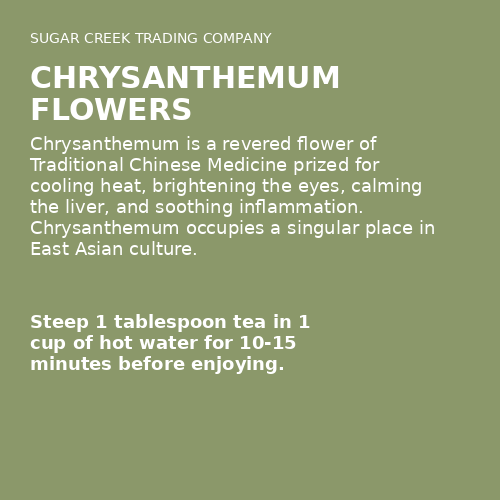
A revered flower of Traditional Chinese Medicine prized for cooling heat, brightening the eyes, calming the liver, and soothing inflammation.
BOTANICAL IDENTIFICATION
Scientific Name: Chrysanthemum morifolium Ramat. (syn. Dendranthema morifolium)
Common Names: Chrysanthemum, Ju Hua, Mum, Florist's Chrysanthemum, Chrysanthemum Flowers, Gong Ju, Hang Ju, Chu Hua
Family: Asteraceae (Daisy/Composite family)
Chrysanthemum is a bushy, herbaceous perennial growing 30–90 cm tall with deeply lobed, aromatic, dark green leaves and composite flower heads that range from white and pale yellow to deep gold depending on the cultivar. The medicinal varieties used in TCM are typically the white-flowered Hang Ju (from Hangzhou) and the yellow-flowered Gong Ju (tribute chrysanthemum), both selected over centuries for their aromatic potency and therapeutic qualities. The dried flower heads are the primary part used in herbal practice.
Chrysanthemum morifolium originated in China, where it has been cultivated for over 2,500 years, making it one of the oldest continuously cultivated ornamental and medicinal plants in the world. It thrives in temperate climates with well-drained soil and full sun to partial shade, and is now grown commercially throughout China, Japan, Korea, and Southeast Asia for both the cut flower and herbal medicine markets.
CULTURAL AND HISTORICAL USE
Chrysanthemum occupies a singular place in East Asian culture. In China, it is one of the "Four Gentlemen" (si junzi) of Chinese art—alongside plum blossom, orchid, and bamboo—symbolizing the virtue of autumn, integrity, and resilience in the face of approaching winter. The Chrysanthemum Festival (Chongyang Jie, Double Ninth Festival) has been celebrated on the ninth day of the ninth lunar month for over two millennia, during which chrysanthemum wine and tea are consumed for longevity and protection. The flower was so revered that an entire city—Kaifeng—became famous for its annual chrysanthemum displays during the Song Dynasty.
In Traditional Chinese Medicine, Ju Hua is classified as a cool, sweet, slightly bitter herb that enters the Lung and Liver meridians. Its primary functions are to disperse wind-heat (treating fever, headache, and sore throat at the onset of colds), calm Liver yang (addressing dizziness, irritability, and high blood pressure), clear Liver heat to brighten the eyes (treating red, dry, or blurry eyes), and clear heat-toxins (addressing skin inflammation and infections). It is one of the most frequently prescribed herbs in the TCM pharmacopoeia and appears in classic formulas such as Sang Ju Yin (Mulberry Leaf and Chrysanthemum Drink) and Qi Ju Di Huang Wan (Lycium, Chrysanthemum, and Rehmannia Pill).
In Japan, chrysanthemum (kiku) is the symbol of the Imperial Family, appearing on the Imperial Seal and the highest order of merit. Japanese cuisine features edible chrysanthemum petals as a garnish, and chrysanthemum tea is consumed for its calming and cooling properties. In Korean traditional medicine, chrysanthemum is similarly used for headaches, eye strain, and hypertension. Western herbalism has more recently adopted chrysanthemum for its anti-inflammatory, antioxidant, and relaxant qualities, integrating it into eye health, allergy, and stress formulations.
KEY BIOACTIVE COMPOUNDS & BENEFITS
| Compound/Class | Location in Plant | Human Benefit | Role in Plant |
|---|---|---|---|
| Flavonoids (Luteolin, Apigenin, Acacetin) | Flower petals and disc florets | Anti-inflammatory, antioxidant, cardiovascular protection, anxiolytic | UV protection and pollinator attraction |
| Chlorogenic Acid & Caffeic Acid Derivatives | Throughout flower head | Antioxidant, liver-protective, blood sugar regulation | Pathogen defense and UV screening |
| Volatile Terpenoids (Camphor, Borneol, Chrysanthenone) | Flower heads (essential oil fraction) | Calming aromatherapy, headache relief, mild antimicrobial | Herbivore deterrence and pollinator signaling |
| Carotenoids (Lutein, Zeaxanthin, Beta-carotene) | Flower petals (especially yellow varieties) | Macular protection, eye health, antioxidant defense | Photoprotection and pigmentation |
| Polysaccharides | Flower heads | Immune modulation, prebiotic activity, anti-fatigue effects | Water retention and structural support |
Chrysanthemum's therapeutic profile centers on its exceptional flavonoid content—particularly luteolin and apigenin, two of the most extensively studied anti-inflammatory and neuroprotective flavonoids in nature. Combined with its carotenoids that specifically accumulate in the macula of the human eye, chrysanthemum offers a pharmacological basis for its centuries-old reputation as a vision-protecting, head-clearing, and calming herb.
HOW IT WORKS IN THE BODY
Chrysanthemum's mechanisms reflect its TCM classification as a cooling, liver-calming, eye-brightening herb, with modern research identifying specific molecular pathways.
Anti-Inflammatory and Immune Modulation:
Luteolin and apigenin inhibit the NF-kB inflammatory signaling pathway and suppress the production of pro-inflammatory cytokines (TNF-alpha, IL-6, IL-1beta) and enzymes (COX-2, iNOS). This broad anti-inflammatory action underlies chrysanthemum's traditional use for red, swollen eyes, sore throats, skin inflammation, and headaches associated with fever or allergies. These flavonoids also modulate mast cell degranulation, giving chrysanthemum mild natural antihistamine properties.
Eye Health and Macular Protection:
Chrysanthemum is one of the richest herbal sources of lutein and zeaxanthin—the two carotenoids that concentrate in the macula of the human eye, where they filter blue light and protect photoreceptor cells from oxidative damage. Regular intake supports macular pigment density, which is associated with reduced risk of age-related macular degeneration. The anti-inflammatory flavonoids further protect the delicate blood vessels of the retina, supporting healthy intraocular pressure and reducing eye strain from prolonged screen use.
Cardiovascular and Blood Pressure Support:
Chrysanthemum flavonoids promote endothelial nitric oxide production, supporting vasodilation and healthy blood pressure. In TCM terms, this corresponds to "calming Liver yang rising"—the pattern associated with hypertension, headache, dizziness, and irritability. Chlorogenic acid in chrysanthemum also supports healthy lipid metabolism and may help regulate blood sugar levels after meals.
Nervous System Calming:
Apigenin binds to GABA-A receptors in the brain, producing mild anxiolytic and sedative effects without the dependence risk of pharmaceutical GABA modulators. The volatile terpenoids (borneol, camphor) contribute additional calming and headache-relieving aromatherapeutic effects when the tea is inhaled during drinking. This dual oral-and-aromatic mechanism makes chrysanthemum tea a genuinely calming ritual, not merely a placebo of tradition.
DOSE GUIDELINES
| Preparation Type | Typical Dose | Purpose |
|---|---|---|
| Chrysanthemum Tea (infusion) | 3–9 grams dried flowers (approx. 1–3 tbsp) steeped in 8–12 oz hot water, 5–10 minutes | Daily eye support, cooling, relaxation, headache relief |
| Chrysanthemum with Goji Berry Tea | 5 g chrysanthemum + 10–15 goji berries, steeped 10 minutes | Classic TCM eye-nourishing formula; liver and kidney yin support |
| Powdered/Encapsulated Extract | 500–1,500 mg standardized extract daily | Concentrated anti-inflammatory and antioxidant support |
| Decoction (stronger therapeutic use) | 9–15 grams simmered in 2 cups water for 15–20 minutes | Acute fever, sore throat, eye infection, headache from wind-heat |
Chrysanthemum tea can be enjoyed daily as a long-term tonic, particularly for eye health and gentle stress relief. In acute situations (onset of cold with fever, red eyes, headache), stronger doses may be used for 3–7 days. The flowers can be re-steeped 2–3 times before their flavor and potency diminish. Honey is a traditional and compatible addition to chrysanthemum tea.
PREPARATION AND USES
Chrysanthemum tea is one of the most popular herbal teas in China, consumed daily by millions. To prepare, place a small handful of dried flower heads (3–9 grams) in a glass or ceramic vessel and pour freshly boiled water over them. Allow to steep for 5–10 minutes—the flowers will unfurl beautifully in the water, creating an elegant, aromatic, pale golden infusion. The flavor is gently floral, slightly sweet, with a clean, cooling finish. Chrysanthemum tea is delicious hot or iced and makes an excellent caffeine-free alternative to green tea.
Classic TCM pairings include chrysanthemum with goji berries (for eye and liver nourishment), with honeysuckle flower (for stronger heat-clearing and sore throat relief), with mulberry leaf (the classic Sang Ju Yin for wind-heat colds), and with rock sugar or honey (for moistening and sweetening). Beyond tea, dried chrysanthemum flowers can be added to soups, congee, and dessert broths in Chinese cooking. Chrysanthemum-infused rice wine is a traditional Double Ninth Festival preparation. The flowers can also be used in facial steams for sinus congestion and skin refreshment, or infused into oils for topical anti-inflammatory applications.
OPTIMAL CONTEXT FOR USE
Chrysanthemum flowers are especially well-suited for individuals experiencing:
Eye strain, dryness, redness, or blurry vision from prolonged screen use or aging
Tension headaches, especially those accompanied by irritability, flushed face, or a feeling of heat rising
Early-stage colds or flu with fever, sore throat, and headache (wind-heat pattern in TCM)
Mild hypertension or a desire for gentle cardiovascular support through daily tea
Stress, restlessness, or difficulty unwinding, particularly in the evening
Chrysanthemum combines beautifully with goji berries for eye and liver support, with green tea for antioxidant synergy, with peppermint for enhanced cooling and headache relief, and with chamomile for a deeply calming evening blend.
SUSTAINABILITY AND ETHICAL HARVESTING
Chrysanthemum morifolium is entirely cultivated; it is not wild-harvested and faces no conservation threats. China is the world's largest producer, with major growing regions in Zhejiang (Hangzhou), Anhui (Huangshan), Henan, and Hubei provinces. The plant is a vigorous, easy-to-grow perennial that is propagated by division and cuttings, requiring moderate water and standard garden soil.
Quality and ethical sourcing concerns revolve around agricultural practices. Conventional chrysanthemum farming in China can involve pesticide and sulfur-fumigation treatments to preserve flower color and prevent insect damage during drying. Sulfur-fumigated flowers may contain sulfur dioxide residues. Consumers should seek chrysanthemum that is sun-dried or shade-dried without chemical fumigation, and ideally from organic or pesticide-tested sources. Supporting producers who use traditional drying methods helps maintain quality and reduces chemical residue concerns.
SAFETY AND CAUTIONS
Chrysanthemum is considered very safe and has been consumed as a daily tea by millions of people across East Asia for centuries. The following cautions should be noted:
Asteraceae/Compositae allergy: Individuals allergic to ragweed, daisies, marigolds, or other members of the Asteraceae family may experience allergic reactions to chrysanthemum, including skin rash, respiratory irritation, or contact dermatitis. Start with a small amount if allergy status is uncertain.
Cooling nature: In TCM terms, chrysanthemum is a cooling herb. Individuals with cold constitutions, chronic loose stools, or pronounced cold sensitivity should use it in moderation or combine it with warming herbs (such as ginger or jujube dates) to balance its cooling effect.
Drug interactions: Chrysanthemum may have mild blood-pressure-lowering effects. Those on antihypertensive medications should monitor their blood pressure. Its flavonoids may also interact with certain medications metabolized by cytochrome P450 enzymes; consult a healthcare provider if taking prescription drugs.
Pregnancy and nursing: Chrysanthemum tea in moderate amounts (1–2 cups daily) is generally considered safe during pregnancy in traditional practice. However, due to its cooling nature, TCM practitioners typically advise moderation during pregnancy, particularly in the first trimester.
REFERENCES
Lin, L.Z. & Harnly, J.M. (2010). "Identification of the phenolic components of chrysanthemum flower (Chrysanthemum morifolium Ramat)." Food Chemistry, 120(1), 319–326.
Yuan, J., Lu, Y., Wang, H., et al. (2020). "Pharmacological effects and mechanisms of chrysanthemum and its bioactive compounds: An updated review." Phytomedicine, 77, 153280.
Bensky, D., Clavey, S., & Stoger, E. (2004). Chinese Herbal Medicine: Materia Medica (3rd ed.). Eastland Press. (Ju Hua monograph, pp. 38–40.)
FINAL NOTE
Chrysanthemum is one of those rare herbs where beauty, tradition, and pharmacology converge perfectly. Its 2,500-year history in Chinese medicine is no accident—the flower genuinely delivers the cooling, eye-brightening, head-clearing, and calming effects that ancient texts describe, now explained by its exceptional luteolin, apigenin, and macular carotenoid content. A cup of chrysanthemum tea is both a moment of stillness and an act of care for the eyes, the liver, and the restless mind.
Share