Sugar Creek Trading Company
Cinnamon Sticks
Cinnamon Sticks
Impossible de charger la disponibilité du service de retrait
CINNAMOMUM SPP.
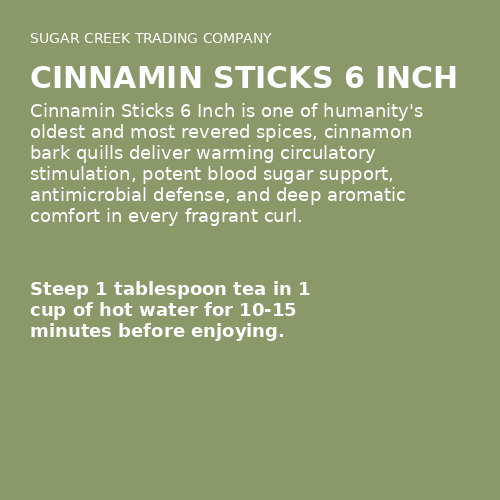
One of humanity's oldest and most revered spices, cinnamon bark quills deliver warming circulatory stimulation, potent blood sugar support, antimicrobial defense, and deep aromatic comfort in every fragrant curl.
BOTANICAL IDENTIFICATION
Scientific Name: Cinnamomum verum J.Presl (Ceylon cinnamon) / Cinnamomum cassia (L.) J.Presl (Cassia cinnamon)
Common Names: Cinnamon, Ceylon Cinnamon, True Cinnamon, Cassia, Chinese Cinnamon, Sweet Wood, Dalchini, Gui Zhi, Tvak
Family: Lauraceae (Laurel family)
Cinnamon is an evergreen tree that grows 10 to 15 meters tall in the wild, with thick, rough outer bark, smooth and aromatic inner bark, and ovate-to-lanceolate leathery leaves that are glossy green above and paler beneath. The tree produces small, yellowish-white flowers in loose panicles, followed by dark purple, olive-sized drupes. The commercially valuable portion is the inner bark, which is harvested by stripping branches, scraping away the outer bark, and allowing the thin inner layers to curl naturally into the characteristic rolled quills as they dry.
Native to Sri Lanka (Ceylon cinnamon) and southern China and mainland Southeast Asia (Cassia cinnamon), cinnamon thrives in tropical and subtropical climates with warm temperatures, high rainfall, and rich, well-drained sandy soils. Sri Lanka, Indonesia, China, and Vietnam are the world's primary producers, each yielding varieties with distinct flavor profiles and coumarin content.
CULTURAL AND HISTORICAL USE
Cinnamon is one of the most ancient spices known to civilization. Egyptian records dating to 2000 BCE document its use in embalming mixtures and perfumes, and it appears in the Hebrew Bible as an ingredient in sacred anointing oil. Arab traders controlled the cinnamon trade for millennia, deliberately obscuring its origins with fantastical stories to protect their monopoly. The spice was so valuable in the ancient world that it was considered a gift worthy of monarchs and deities, and its trade helped shape the maritime routes that connected Asia to the Mediterranean.
In Traditional Chinese Medicine, cinnamon bark (Rou Gui) and cinnamon twig (Gui Zhi) are among the most important warming herbs. Rou Gui is classified as acrid, sweet, and hot, entering the Kidney, Spleen, Heart, and Liver channels. It is used to fortify Kidney Yang, warm the Spleen, promote circulation, and dispel deep cold. Gui Zhi, from the younger twigs, is milder and used to release exterior wind-cold and warm the channels. In Ayurveda, cinnamon (Tvak or Dalchini) is regarded as a warming, Kapha-reducing spice that strengthens Agni (digestive fire), supports respiratory health, and promotes healthy circulation. It is commonly included in chai spice blends and digestive churnas.
European herbalists from the medieval period onward valued cinnamon as a carminative, digestive stimulant, and warming remedy for colds and flu. It was a key ingredient in mulled wines, spiced meads, and numerous pharmaceutical preparations. In the folk medicine traditions of Central America and the Caribbean, cinnamon tea (te de canela) remains one of the most widely consumed home remedies for menstrual cramps, digestive complaints, and colds. Across cultures, cinnamon has served simultaneously as spice, medicine, preservative, and sacred offering for over four thousand years.
KEY BIOACTIVE COMPOUNDS & BENEFITS
| Compound/Class | Location in Plant | Human Benefit | Role in Plant |
|---|---|---|---|
| Cinnamaldehyde (65-80% of bark essential oil) | Inner bark | Antimicrobial; anti-inflammatory; blood sugar regulation; warming circulatory stimulant | Primary antimicrobial and antifungal defense compound |
| Eugenol | Bark and leaves | Analgesic; anti-inflammatory; local anesthetic; dental pain relief | Antifungal defense; herbivore deterrent |
| Proanthocyanidins (Type-A polyphenols) | Bark | Potent insulin-sensitizing activity; antioxidant; cardiovascular support | UV protection; antimicrobial defense |
| Cinnamate and cinnamic acid | Bark | Antioxidant; neuroprotective; anti-inflammatory | Precursor to lignin; structural defense |
| Coumarin (variable by species) | Bark (high in Cassia, low in Ceylon) | Anti-inflammatory in low doses; hepatotoxic concern at high chronic intake | Antimicrobial and allelopathic compound |
Cinnamaldehyde is the signature compound that gives cinnamon its distinctive warm, spicy-sweet aroma and drives the majority of its metabolic and antimicrobial effects. The Type-A proanthocyanidins in cinnamon are relatively rare in the plant kingdom and are specifically linked to its insulin-sensitizing properties. Together, these compounds create a phytochemical profile that uniquely bridges culinary pleasure and meaningful metabolic support.
HOW IT WORKS IN THE BODY
Cinnamon acts as a warming circulatory stimulant that enhances insulin sensitivity, combats microbial infections, reduces inflammation, and supports cardiovascular and digestive health.
Blood Sugar Regulation and Insulin Sensitivity:
Cinnamon's Type-A proanthocyanidins mimic insulin's action at the cellular level by activating insulin receptor signaling pathways, including the phosphorylation of the insulin receptor substrate. This enhances the uptake of glucose into cells without requiring additional insulin production. Cinnamaldehyde also inhibits intestinal alpha-glucosidase enzymes, slowing the breakdown of complex carbohydrates and reducing post-meal blood sugar spikes. Multiple clinical trials have shown modest but statistically significant reductions in fasting blood glucose and HbA1c in individuals with type 2 diabetes who consume 1 to 6 grams of cinnamon daily.
Antimicrobial and Antifungal Action:
Cinnamaldehyde disrupts microbial cell membranes and inhibits key enzymes in bacterial and fungal metabolism. It has demonstrated activity against a wide range of pathogens, including Staphylococcus aureus, Escherichia coli, Helicobacter pylori, Candida albicans, and Aspergillus species. Cinnamon essential oil is one of the most potent botanical antimicrobials tested in laboratory settings, and its vapor alone can inhibit mold growth on stored foods.
Cardiovascular and Lipid Support:
Regular cinnamon intake has been associated with modest reductions in total cholesterol, LDL cholesterol, and triglycerides in several clinical studies. The antioxidant polyphenols in cinnamon help protect LDL cholesterol from oxidation, a key step in atherosclerotic plaque formation. Cinnamaldehyde also promotes vasodilation by stimulating nitric oxide production, which supports healthy blood pressure.
Digestive Warming and Carminative Effects:
Cinnamon stimulates the secretion of digestive enzymes and gastric juices, accelerating the breakdown of food and relieving feelings of heaviness after meals. Its essential oil compounds relax smooth muscle in the gastrointestinal tract, reducing gas, bloating, and intestinal cramping. As a warming herb, cinnamon increases blood flow to the digestive organs, supporting overall digestive efficiency.
DOSE GUIDELINES
| Preparation Type | Typical Dose | Purpose |
|---|---|---|
| Cinnamon stick tea (decoction) | 1 six-inch stick simmered in 3-4 cups water for 15-20 minutes | Digestive warming; blood sugar support; cold and flu relief |
| Ground bark (culinary or capsule) | 1 to 6 grams daily (approx. 1/2 to 2 teaspoons) | Metabolic support; antioxidant intake; blood sugar regulation |
| Tincture (1:5, 60% ethanol) | 2-4 mL, 2-3 times daily | Concentrated digestive and circulatory support |
| Cinnamon stick as stirring stick or garnish | 1 stick per mug or cocktail | Gentle flavor infusion; mild blood sugar and digestive benefits |
These longer 6-inch cinnamon sticks offer generous surface area for a slow, controlled release of flavor and active compounds, making them ideal for simmering in larger pots of tea, broth, cider, or mulled wine. For therapeutic blood sugar support, consistent daily use of 1 to 6 grams over a period of weeks is most effective. Those using Cassia-type cinnamon at higher doses should be mindful of cumulative coumarin intake and may wish to alternate with Ceylon cinnamon for long-term use.
PREPARATION AND USES
These 6-inch cinnamon sticks are a dramatic, full-length format prized by serious cooks, tea blenders, and beverage crafters for their generous extraction and visual presentation. To prepare a rich cinnamon decoction, place one stick in a saucepan with 3 to 4 cups of water, bring to a gentle boil, then reduce heat and simmer for 15 to 20 minutes. The extended stick length allows for a thorough, even extraction that shorter sticks cannot match in larger volumes. Strain and enjoy on its own, or blend with ginger, cardamom, and black pepper for a traditional chai base. Sticks can be reused for a second, lighter brew before composting.
In the kitchen, 6-inch sticks are the preferred size for large-batch recipes: mulled wine and cider, holiday punches, poaching liquids for fruit, braised meats, tagines, biryanis, and simmering stocks. Their length makes them easy to spot and remove from a pot when cooking is complete. They also serve as elegant stirring sticks for hot chocolate, coffee, cocktails, and specialty drinks, slowly releasing cinnamon flavor and aroma with each stir. For decorative and craft purposes, 6-inch cinnamon sticks are popular in wreaths, potpourri, candle displays, and holiday table settings, where their fragrance and rustic beauty add natural warmth. They can also be ground fresh in a spice grinder for homemade cinnamon powder with maximum potency.
OPTIMAL CONTEXT FOR USE
Cinnamon sticks are especially well-suited for individuals experiencing:
Blood sugar imbalances, insulin resistance, pre-diabetes, or metabolic syndrome, where gentle, food-based glycemic support is desired
Cold hands and feet, sluggish circulation, or a generally cold constitution that benefits from warming herbs
Digestive sluggishness, bloating, gas, or nausea, particularly related to cold or damp conditions
Frequent colds, sore throats, or respiratory congestion, where a warming antimicrobial tea provides comfort and defense
A desire to reduce sugar intake by using cinnamon's natural sweetness perception to satisfy cravings without added sugar
Cinnamon combines exceptionally well with ginger for enhanced warming and digestive action, with turmeric and black pepper for anti-inflammatory synergy, with cardamom and clove in chai blends, and with honey for sore throat and cough relief.
SUSTAINABILITY AND ETHICAL HARVESTING
Cinnamon is one of the most sustainably harvested spices in the world. The trees are coppiced (cut back to the stump) rather than killed, and they regenerate vigorously, producing new shoots that can be harvested every two to three years. This coppice cycle allows a single cinnamon tree to remain productive for decades without replanting. In Sri Lanka, where the finest Ceylon cinnamon originates, traditional cinnamon gardens (known as "kurundu" plantations) are managed by skilled peelers whose families have practiced the craft for generations.
Cassia cinnamon from Indonesia, China, and Vietnam is similarly sustainable, as the trees are fast-growing and readily cultivated. Cinnamon cultivation generally integrates well into tropical agroforestry systems, providing shade, preventing soil erosion, and supporting biodiversity. The species is not threatened or endangered. Sourcing from established, reputable supply chains ensures fair compensation for the farmers and peelers whose labor-intensive work produces this essential spice.
SAFETY AND CAUTIONS
Cinnamon is generally recognized as safe (GRAS) when used in normal culinary quantities. The following cautions apply to concentrated or high-dose therapeutic use:
Coumarin content (Cassia varieties): Cassia cinnamon contains significant levels of coumarin (2,000-5,000 ppm), which can cause liver stress at high chronic intake. The European Food Safety Authority recommends a tolerable daily intake of 0.1 mg coumarin per kg body weight. Individuals consuming more than 1-2 teaspoons of Cassia cinnamon daily on a long-term basis should consider alternating with Ceylon cinnamon, which contains only trace amounts of coumarin.
Blood sugar medication interaction: Because cinnamon can lower blood glucose, individuals taking insulin or oral hypoglycemic medications should monitor blood sugar closely when adding therapeutic doses of cinnamon to their regimen, as additive effects may occur.
Blood-thinning medication interaction: Cinnamaldehyde and coumarin both have mild anticoagulant properties. Those taking warfarin or other blood thinners should use concentrated cinnamon supplements with caution and consult their healthcare provider.
Pregnancy: Culinary amounts of cinnamon are considered safe during pregnancy. However, high-dose cinnamon supplements and cinnamon essential oil should be avoided during pregnancy, as cinnamaldehyde may stimulate uterine contractions.
Skin and mucous membrane irritation: Cinnamon essential oil and concentrated extracts can cause contact dermatitis or oral irritation in sensitive individuals. Always dilute before topical or oral use.
REFERENCES
Khan, A., et al. (2003). "Cinnamon improves glucose and lipids of people with type 2 diabetes." Diabetes Care, 26(12), 3215-3218.
Rao, P.V. & Gan, S.H. (2014). "Cinnamon: A multifaceted medicinal plant." Evidence-Based Complementary and Alternative Medicine, 2014, 642942.
Blahova, J. & Svobodova, Z. (2012). "Assessment of coumarin levels in ground cinnamon available in the Czech retail market." The Scientific World Journal, 2012, 263851.
FINAL NOTE
There is something deeply satisfying about a full-length cinnamon stick: the way its tightly curled layers unfurl their fragrance into a simmering pot, the way it transforms a simple cup of water into something warm and medicinal and comforting. These 6-inch quills are the format of choice for anyone who takes their cinnamon seriously, whether for large-batch brewing, slow-cooked culinary creations, or simply the pleasure of stirring a drink with a stick of one of the oldest medicines on Earth. Four millennia of continuous human use is not an accident; it is a testament to a plant that delivers exactly what it promises.
Share