Sugar Creek Trading Company
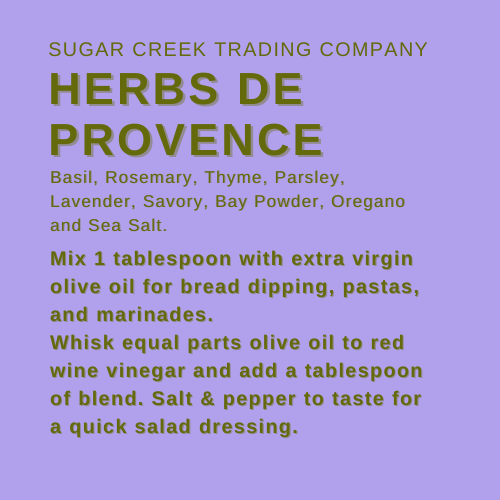
Herbs de Provence
Herbs de Provence
Impossible de charger la disponibilité du service de retrait
HERBES DE PROVENCE
The iconic aromatic blend of southern France, uniting thyme, rosemary, savory, marjoram, and lavender into a singular expression of Mediterranean culinary tradition and herbal wellness.
BOTANICAL IDENTIFICATION
Blend Components: Thymus vulgaris (Thyme), Rosmarinus officinalis (Rosemary), Satureja hortensis (Summer Savory), Origanum majorana (Marjoram), Lavandula angustifolia (Lavender), Origanum vulgare (Oregano)
Common Names: Herbs de Provence, Herbes de Provence, Provencal Herb Blend
Family: Lamiaceae (Mint family) -- all primary components
Herbs de Provence is a traditional dried herb blend composed of aromatic plants that grow wild and in cultivation across the sun-drenched limestone hillsides of Provence in southeastern France. Each component is a low-growing perennial or annual herb in the mint family, characterized by square stems, opposite leaves, and volatile oil glands that produce the intensely aromatic essential oils responsible for the blend's distinctive fragrance. The plants share a preference for dry, rocky, alkaline soils and full Mediterranean sun, conditions that concentrate their essential oil production and flavor intensity.
While the individual herbs are native to the Mediterranean basin and have been gathered from the wild garrigue (scrubland) of Provence for centuries, the standardized blend known as "Herbes de Provence" was actually codified as a commercial product in the 1970s by French spice companies seeking to package the flavors of the region for wider distribution. Today, these herbs are cultivated across southern Europe, North Africa, and temperate regions worldwide.
CULTURAL AND HISTORICAL USE
The herbs that compose this blend have been central to Mediterranean cooking and medicine for thousands of years. Ancient Greek and Roman texts, including those of Dioscorides, Pliny, and Galen, document the use of thyme, rosemary, savory, and marjoram as both culinary seasonings and medicinal agents. Thyme was burned as temple incense and used to embalm the dead in Egypt. Rosemary was sacred to Aphrodite and later became a symbol of remembrance in European folklore. Savory was considered an aphrodisiac by the Romans, who planted it extensively across their colonies. Marjoram was associated with joy and was woven into wedding crowns in ancient Greece.
In Provencal cooking, these herbs were never measured from jars but simply gathered in handfuls from the garden or hillside and tossed into the pot. They formed the aromatic backbone of daubes (slow-braised stews), grilled meats, ratatouille, pistou, and the herb-rubbed roasts that define the cuisine of the region. The addition of lavender, which distinguishes authentic Provencal blends from generic Mediterranean herb mixtures, reflects the plant's ubiquitous presence in the Provencal landscape, where lavender fields stretch to the horizon and perfume the air for miles.
Medicinally, every herb in this blend has a long history of therapeutic use in European folk medicine and formalized Western herbalism. Thyme was the primary respiratory herb of European tradition, used for coughs, bronchitis, and whooping cough. Rosemary was the quintessential herb for memory, circulation, and headaches. Savory and marjoram were carminatives, used to ease digestive discomfort and gas. Lavender was the nervine par excellence, used for anxiety, insomnia, and nervous headaches. Together, this blend represents a potent convergence of culinary pleasure and therapeutic benefit.
KEY BIOACTIVE COMPOUNDS & BENEFITS
| Compound/Class | Location in Plant | Human Benefit | Role in Plant |
|---|---|---|---|
| Thymol and carvacrol (phenolic monoterpenes) | Thyme, savory, oregano | Potent antimicrobial, antifungal, and antioxidant; support respiratory and digestive health | Defense against pathogens and herbivores |
| Rosmarinic acid (polyphenol) | Rosemary, marjoram, thyme | Anti-inflammatory, antioxidant; protects cells from oxidative damage | UV protection and antimicrobial defense |
| Carnosic acid and carnosol (diterpenes) | Rosemary | Neuroprotective, antioxidant; support cognitive function and memory | Oxidative stress protection in leaf tissue |
| Linalool and linalyl acetate (monoterpene alcohols) | Lavender | Anxiolytic, calming, sleep-promoting; reduce nervous tension | Pollinator attraction and antimicrobial defense |
| Ursolic acid (triterpene) | Thyme, rosemary, marjoram | Anti-inflammatory, supports healthy blood sugar metabolism and muscle preservation | Waxy cuticle component; drought and UV protection |
The combined phytochemistry of Herbs de Provence creates a blend that is far more than the sum of its parts. The synergy between thymol's antimicrobial power, rosmarinic acid's anti-inflammatory action, rosemary's neuroprotective diterpenes, and lavender's calming linalool produces a seasoning that simultaneously enhances the flavor of food, aids its digestion, preserves it from spoilage, and delivers a broad spectrum of protective antioxidants with every meal. This is the practical wisdom of traditional cuisine distilled into a single blend.
HOW IT WORKS IN THE BODY
When consumed as a culinary seasoning, the bioactive compounds in Herbs de Provence exert their effects across multiple organ systems, even at the modest doses typical of food use.
Digestive Support and Antimicrobial Activity:
Thymol, carvacrol, and the volatile oils present in thyme, savory, and oregano stimulate the secretion of gastric juices and bile, promoting efficient digestion of proteins and fats. These same compounds have well-documented antimicrobial activity against foodborne pathogens including E. coli, Salmonella, and Listeria, which is one reason these herbs became integral to the cuisine of warm Mediterranean climates where food preservation was historically critical. The carminative properties of marjoram and savory help relax smooth muscle in the gastrointestinal tract, reducing bloating and gas.
Antioxidant Protection:
Rosmarinic acid, carnosic acid, and the flavonoids present across all herbs in the blend are among the most potent dietary antioxidants known. When consumed regularly as part of a Mediterranean-style diet, these compounds help neutralize reactive oxygen species, reduce lipid peroxidation, and protect cellular DNA from oxidative damage. Research consistently shows that populations consuming traditional Mediterranean diets rich in these herbs have lower rates of cardiovascular disease, neurodegenerative conditions, and certain cancers.
Respiratory Support:
The volatile essential oils, particularly thymol from thyme and eucalyptol traces from rosemary, provide expectorant and bronchodilatory effects. Even inhaling the steam from cooking with these herbs can help open airways and thin mucus. This is why thyme-based preparations have been the first-line herbal treatment for coughs and bronchitis in European pharmacopoeias for centuries.
Nervous System and Cognitive Function:
Lavender's linalool and rosemary's carnosic acid work on different but complementary aspects of nervous system health. Linalool modulates GABA receptors to produce calming, anxiolytic effects, while carnosic acid activates the Nrf2 antioxidant pathway in brain tissue, protecting neurons from oxidative damage and supporting memory and concentration. The traditional association of rosemary with remembrance has been validated by clinical research showing improved cognitive performance following exposure to rosemary aroma.
DOSE GUIDELINES
| Preparation Type | Typical Dose | Purpose |
|---|---|---|
| Culinary seasoning | 1-3 teaspoons per dish, added during cooking | Flavor enhancement and daily dietary antioxidant intake |
| Herbal infusion (tea) | 1-2 teaspoons per cup of boiling water, steeped 10-15 minutes, covered | Digestive support, respiratory relief, relaxation |
| Infused oil | 2-3 tablespoons of blend per cup of olive oil, warmed gently for 1-2 hours or infused cold for 2 weeks | Culinary finishing oil with concentrated herbal benefits |
| Seasoning rub | 2-4 tablespoons blended with olive oil, garlic, and salt; applied to meats or vegetables before cooking | Flavor development and antimicrobial food preservation |
As a culinary blend, Herbs de Provence is designed for daily use in cooking and delivers its health benefits most effectively through consistent, long-term dietary inclusion. The volatile oils are best preserved by adding the herbs during the last 15 to 30 minutes of cooking for dishes with long cook times, or by incorporating them into dressings, marinades, and finishing applications where heat exposure is minimal. For therapeutic purposes, a strong herbal tea made from the blend provides a pleasant-tasting vehicle for more concentrated delivery of the active compounds.
PREPARATION AND USES
Herbs de Provence is one of the most versatile seasoning blends in any kitchen. Its classic applications include rubbing onto chicken, lamb, or pork before roasting or grilling; stirring into ratatouille, tomato sauces, and vegetable stews; seasoning potatoes, root vegetables, and gratins; and incorporating into bread doughs, focaccia, and savory pastries. The blend is excellent mixed with olive oil and brushed onto vegetables before grilling, or whisked into vinaigrettes for salads. It can be sprinkled over goat cheese, stirred into omelets and quiches, or used to season homemade sausages and meatballs.
Beyond the kitchen, the blend makes a soothing herbal tea when steeped in boiling water for 10 to 15 minutes in a covered vessel (covering is important to prevent the volatile oils from escaping with the steam). This tea is particularly welcome after a heavy meal to aid digestion, or in the evening for gentle relaxation courtesy of the lavender content. To make an infused oil, combine the herbs with quality olive oil in a clean glass jar and allow to infuse in a cool, dark place for two weeks, shaking daily. Strain and use as a finishing oil for soups, pasta, roasted vegetables, or crusty bread. The blend can also be tied into cheesecloth sachets and added to bath water for an aromatic, muscle-relaxing soak.
OPTIMAL CONTEXT FOR USE
Herbs de Provence is especially well-suited for individuals seeking:
A flavorful, aromatic way to incorporate the health benefits of Mediterranean herbs into everyday cooking, supporting the antioxidant-rich dietary pattern associated with longevity and reduced chronic disease
Digestive support through culinary means, particularly for those who experience bloating, gas, or sluggish digestion after meals containing rich or heavy foods
A gentle, food-based approach to respiratory wellness during cold and flu season, through both cooking and herbal tea preparations
An authentic, high-quality seasoning blend for Mediterranean, French, and Southern European recipes that require the specific flavor profile of Provencal herbs
Herbs de Provence pairs beautifully with olive oil, garlic, lemon, and Dijon mustard in marinades. It complements other Mediterranean pantry staples including capers, olives, sun-dried tomatoes, and anchovies. For enhanced wellness benefits, combine regular culinary use with an antioxidant-rich diet featuring plenty of vegetables, fruits, whole grains, and healthy fats.
SUSTAINABILITY AND ETHICAL HARVESTING
All of the herbs in this blend are extensively cultivated crops with abundant global supply. Thyme, rosemary, oregano, marjoram, savory, and lavender are among the most widely grown aromatic herbs in the world, cultivated commercially across the Mediterranean basin, North Africa, Eastern Europe, and the Americas. These hardy, drought-tolerant perennials require minimal irrigation and few inputs, making them relatively low-impact crops. Lavender cultivation in particular supports pollinator populations, as lavender fields are major foraging sites for honeybees and wild bees throughout southern France and other growing regions.
Wild harvesting of these herbs from the Provencal garrigue and similar Mediterranean scrublands does occur on a small scale and is a traditional practice that, when done sustainably, has minimal ecological impact given the abundance and resilience of these species. None of the component herbs are listed as threatened by any conservation body. Choosing organically grown blends supports farming practices that avoid synthetic pesticides, protecting both the ecosystem and the consumer.
SAFETY AND CAUTIONS
Herbs de Provence is a culinary seasoning blend with an excellent safety profile when used in normal food quantities. The following notes are offered for completeness:
Individuals with known allergies to plants in the Lamiaceae (mint) family should exercise caution, though allergic reactions to these common culinary herbs are rare.
Rosemary in large supplemental doses (not typical culinary amounts) may interact with blood-thinning medications, lithium, and certain diabetes medications. Normal culinary use does not typically reach pharmacologically significant doses.
Pregnant women can enjoy this blend freely as a culinary seasoning. The caution against large supplemental doses of individual herbs (particularly rosemary and thyme in concentrated therapeutic preparations) does not apply to normal food use.
Those on blood pressure medications should be aware that rosemary and thyme may have mild effects on blood pressure, though again, culinary doses are generally well below the threshold of pharmacological concern.
REFERENCES
Singletary, K. (2016). "Rosemary: An overview of potential health benefits." Nutrition Today, 51(2), 102-112.
Dauqan, E.M.A. & Abdullah, A. (2017). "Medicinal and functional values of thyme (Thymus vulgaris L.) herb." Journal of Applied Biology & Biotechnology, 5(2), 17-22.
Nieto, G. (2017). "Biological activities of three essential oils of the Lamiaceae family." Molecules, 22(5), 681.
FINAL NOTE
Herbs de Provence is the flavor of the Mediterranean sun captured in a blend, a tradition born not from recipe books but from the wild hillsides where these plants have grown together for millennia. Every pinch delivers the combined antimicrobial, antioxidant, digestive, and aromatic properties of some of the most well-studied medicinal herbs in the Western tradition. It is a reminder that the boundary between food and medicine was never as sharp as modern culture suggests, and that the best health strategies often begin with what we choose to put in the pot.
Share