Sugar Creek Trading Company
Nopal Cactus
Nopal Cactus
Impossible de charger la disponibilité du service de retrait
OPUNTIA FICUS-INDICA
A foundational food-medicine of Mesoamerican civilization -- the prickly pear cactus pad that has sustained Indigenous peoples for millennia and now commands serious scientific attention for its remarkable effects on blood sugar regulation, cholesterol metabolism, and inflammatory conditions.
BOTANICAL IDENTIFICATION
Scientific Name: Opuntia ficus-indica (L.) Mill.
Common Names: Nopal, Prickly Pear Cactus, Nopales, Tuna Cactus, Indian Fig, Barbary Fig, Cactus Pear, Cholla
Family: Cactaceae (Cactus family)
Opuntia ficus-indica is a large, branching succulent shrub or tree-like cactus that grows 3 to 5 meters tall, composed of flattened, oval stem segments called cladodes (commonly called "pads" or "nopales") that are 20 to 60 centimeters long and 1 to 2 centimeters thick. The cladodes are bright to dark green, succulent, and covered with areoles that bear glochids (tiny, barbed bristles) and, in wild forms, larger spines, though many cultivated varieties are nearly spineless. Large, showy flowers in shades of yellow, orange, or red emerge along the edges of mature pads and develop into the edible, barrel-shaped fruit known as "tuna" (prickly pear), which is covered in glochids and contains sweet, seed-studded pulp. The cladodes themselves are the primary medicinal and culinary product.
Native to central Mexico, where it has been cultivated for at least 9,000 years, Opuntia ficus-indica was spread by Spanish colonists to the Mediterranean, North Africa, the Middle East, and beyond. It now grows throughout arid and semi-arid regions worldwide, from the American Southwest to southern Europe, Ethiopia, South Africa, and Australia. The plant thrives in full sun, poor or rocky soils, and drought conditions, utilizing CAM (Crassulacean acid metabolism) photosynthesis, which allows it to open its stomata at night to conserve water -- an extraordinary adaptation to desert environments.
CULTURAL AND HISTORICAL USE
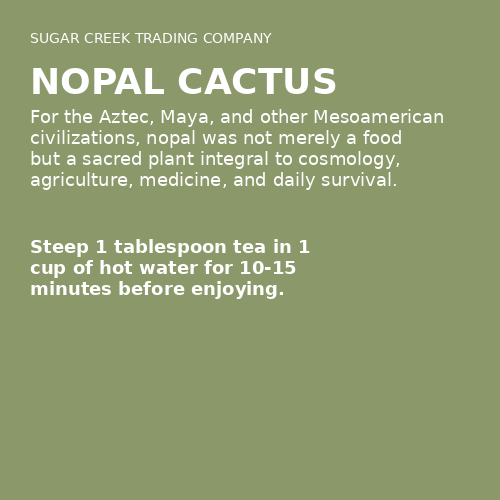
Nopal holds a place in Mexican culture so profound that it appears on the national flag and coat of arms: an eagle perched on a nopal cactus devouring a serpent, referencing the Aztec foundation myth of Tenochtitlan. For the Aztec, Maya, and other Mesoamerican civilizations, nopal was not merely a food but a sacred plant integral to cosmology, agriculture, medicine, and daily survival. Archaeological evidence from the Tehuacan Valley in Puebla, Mexico, documents human consumption of Opuntia cladodes and fruit dating back at least 9,000 years, making it one of the oldest continuously used food-medicines in the Americas.
Aztec physicians (ticitl) prescribed nopal cladodes for a wide range of ailments documented in colonial-era codices including the Codex Badianus (1552), the first illustrated herbal of the New World. Applications included fevers, wounds, digestive inflammation, urinary conditions, and liver complaints. The mucilaginous gel from fresh cladodes was applied to burns and wounds as a soothing, protective poultice. Nopal fruit was consumed for kidney and urinary conditions, and the pad's juice was drunk for stomach inflammation. In traditional Mexican curanderismo (folk healing), nopal remains a primary remedy for type 2 diabetes ("azucar en la sangre"), high cholesterol, and obesity -- uses that have now been substantially validated by clinical research.
When Opuntia was introduced to the Mediterranean basin in the 16th century, it was rapidly adopted into local food and medicine systems. In Sicily, North Africa, and the Middle East, the fruit (tuna or fico d'India) became an important food crop, while the pads were used medicinally for gastrointestinal inflammation and as an animal feed. The plant's capacity to grow on degraded, marginal land made it an agricultural asset in regions where few other crops could survive. Today, Mexico alone produces over 800,000 metric tons of nopal cladodes annually for human consumption, and the plant is cultivated commercially in Italy, Spain, North Africa, Ethiopia, Brazil, Chile, Israel, and the American Southwest.
KEY BIOACTIVE COMPOUNDS & BENEFITS
| Compound/Class | Location in Plant | Human Benefit | Role in Plant |
|---|---|---|---|
| Mucilaginous polysaccharides (galacturonan, arabinan, xylan-rich pectin) | Cladodes (pads) | Blood sugar regulation (slows glucose absorption); cholesterol binding; gastrointestinal soothing | Water retention in arid environments; structural gel matrix |
| Betalains (betanin, indicaxanthin, betacyanins) | Fruit and cladodes | Potent antioxidant; anti-inflammatory; hepatoprotective | UV protection; pigmentation; antioxidant defense |
| Flavonoids (isorhamnetin, quercetin, kaempferol glycosides) | Cladodes and flowers | Anti-inflammatory, antioxidant, capillary-protective, diuretic | UV filtration and pollinator attraction |
| Soluble and insoluble dietary fiber (pectin, cellulose, hemicellulose) | Cladodes | Cholesterol reduction (bile acid binding); glycemic modulation; satiety; prebiotic effects | Structural support and water management |
| Phytosterols (beta-sitosterol, campesterol) | Cladodes | Cholesterol absorption inhibition; anti-inflammatory in vascular tissue | Cell membrane structural components |
The mucilaginous polysaccharides and dietary fiber are the defining therapeutic compounds of nopal cladodes, responsible for the majority of the plant's documented effects on blood sugar, cholesterol, and digestive function. The pectin-rich mucilage forms a viscous gel in the digestive tract that physically slows the absorption of glucose and binds bile acids (forcing the liver to pull cholesterol from the blood to synthesize new bile). The betalain and flavonoid fractions add powerful antioxidant and anti-inflammatory dimensions that protect against the oxidative damage associated with metabolic syndrome and diabetes.
HOW IT WORKS IN THE BODY
Nopal cladode exerts its effects primarily through physical-mechanical actions in the gastrointestinal tract combined with systemic antioxidant and anti-inflammatory activity from its absorbed phytochemical constituents.
Blood Sugar Regulation:
Multiple controlled clinical trials in human subjects have demonstrated that nopal cladode consumption significantly reduces postprandial (after-meal) blood glucose spikes. The primary mechanism is physical: the mucilaginous polysaccharides form a viscous gel layer along the intestinal wall that slows the rate of carbohydrate digestion and glucose absorption. Additionally, nopal fiber increases insulin sensitivity by modulating the incretin hormones GLP-1 and GIP, which regulate insulin secretion from pancreatic beta cells. A landmark study by Frati-Munari et al. (1988) demonstrated that a single dose of nopal cladode reduced blood glucose levels by 17-46% in type 2 diabetic patients compared to controls.
Cholesterol and Lipid Metabolism:
Nopal's soluble fiber, particularly the pectin fraction, binds bile acids in the intestinal lumen and prevents their reabsorption. This forces the liver to draw on circulating LDL cholesterol to synthesize new bile acids, effectively lowering serum LDL cholesterol. The phytosterols in nopal cladodes provide an additional mechanism by competing with dietary cholesterol for absorption at the intestinal brush border. Clinical studies have demonstrated reductions in total cholesterol, LDL cholesterol, and triglycerides with regular nopal consumption, along with modest increases in HDL cholesterol.
Gastrointestinal Protection:
The thick mucilage produced by nopal cladodes forms a protective coating on inflamed gastric and intestinal mucosa, soothing irritation and supporting tissue repair. This demulcent action parallels that of other mucilaginous herbs like marshmallow root and slippery elm bark. The prebiotic fiber content also feeds beneficial intestinal bacteria, supporting a healthy microbiome composition. Animal studies have demonstrated gastroprotective effects against ethanol-induced and NSAID-induced gastric ulcers.
Antioxidant and Anti-Inflammatory Effects:
The betalain pigments in nopal are among the most potent plant antioxidants measured by ORAC (Oxygen Radical Absorbance Capacity) assays, with activity comparable to or exceeding that of vitamin C and vitamin E on a molar basis. Indicaxanthin, the predominant yellow betalain in nopal, has demonstrated the ability to cross the blood-brain barrier in animal models, suggesting potential neuroprotective applications. The flavonoid fraction (particularly isorhamnetin glycosides) inhibits COX-2 and reduces NF-kB activation, providing anti-inflammatory support that complements the metabolic effects.
DOSE GUIDELINES
| Preparation Type | Typical Dose | Purpose |
|---|---|---|
| Dried cladode powder | 3-10 grams daily (1-3 teaspoons), divided into 2-3 doses taken before meals | Blood sugar regulation, cholesterol management, digestive support |
| Capsules (dried cladode powder) | 1,000-3,000 mg, taken 20-30 minutes before meals | Convenient glycemic and lipid support |
| Decoction (dried cladode pieces) | 1-2 tablespoons simmered in 2 cups water for 15-20 minutes; 1-2 cups daily before meals | Traditional Mexican preparation for diabetes and inflammation |
| Blended into smoothies or food | 1-3 tablespoons powder blended into drinks or stirred into oatmeal, soups, etc. | Food-based approach for daily metabolic support |
Timing is critical with nopal: for blood sugar and cholesterol benefits, the dried cladode should be consumed 20 to 30 minutes before meals to allow the mucilaginous gel to form in the stomach before food arrives. This is how it was traditionally consumed in Mexican folk medicine and is consistent with the clinical trial protocols that demonstrated efficacy. Nopal is safe for long-term, daily use and is consumed as a dietary staple by millions of people in Mexico and the Mediterranean.
PREPARATION AND USES
The dried nopal cladode offered here can be prepared in multiple ways. The simplest method is to stir the powder into a glass of water and drink it 20 to 30 minutes before a meal -- the resulting mixture will be slightly mucilaginous and mildly vegetal in flavor, easily enhanced with a squeeze of lime juice (the traditional Mexican accompaniment). The powder can also be blended into green smoothies, mixed into oatmeal or yogurt, or stirred into soups and stews as a thickening and nutritive agent.
For a traditional Mexican nopal decoction (agua de nopal), simmer dried cladode pieces in water for 15 to 20 minutes, strain the resulting thick, slightly gelatinous liquid, add lime juice and a small amount of honey or pineapple juice, and drink before meals. This preparation preserves the maximum mucilage content. Nopal powder can also be encapsulated for those who prefer a no-preparation option. In culinary use, nopal is a remarkably versatile ingredient: the rehydrated dried pieces can be added to scrambled eggs, bean dishes, salads, and salsas, reflecting its central role in Mexican cuisine. Nopal combines therapeutically with cinnamon and fenugreek for enhanced blood sugar management, with psyllium husk for maximum cholesterol-lowering fiber intake, and with turmeric for synergistic anti-inflammatory effects.
OPTIMAL CONTEXT FOR USE
Nopal cactus is especially well-suited for individuals experiencing:
Type 2 diabetes or prediabetes, where postprandial blood sugar spikes need to be managed through dietary and botanical intervention alongside conventional treatment
Elevated cholesterol and triglyceride levels, particularly LDL cholesterol, where bile acid binding and phytosterol-mediated cholesterol absorption inhibition provide measurable lipid improvement
Metabolic syndrome, characterized by the cluster of high blood sugar, dyslipidemia, central obesity, and hypertension, where nopal addresses multiple components simultaneously
Gastrointestinal inflammation, including gastritis, acid reflux, and irritable bowel conditions, where the mucilaginous gel provides soothing, protective action on inflamed mucosa
Weight management goals, where nopal's high fiber content promotes satiety, slows caloric absorption, and supports a healthy gut microbiome -- all without significant caloric contribution
Nopal combines effectively with bitter melon and gymnema for comprehensive herbal blood sugar management, with flaxseed and oat bran for maximum cholesterol-lowering fiber synergy, and with aloe vera gel for enhanced gastrointestinal mucosal healing.
SUSTAINABILITY AND ETHICAL HARVESTING
Opuntia ficus-indica is among the most sustainable and ecologically beneficial crops on the planet. It grows in arid and semi-arid environments where most conventional crops fail, requires minimal water (thriving on as little as 200 millimeters of annual rainfall), needs no synthetic fertilizers or pesticides in traditional cultivation, and actually improves degraded soils through its root system. The FAO (Food and Agriculture Organization of the United Nations) has actively promoted Opuntia cultivation as a climate change adaptation strategy for dryland agriculture, and the plant is increasingly recognized as a critical food security resource in the face of global water scarcity.
Mexico's nopal industry supports hundreds of thousands of smallholder farmers and is deeply integrated into the national food system. The plant produces harvestable cladodes within one year of planting and continues producing for 20 to 30 years, making it an exceptionally efficient perennial crop. There are no CITES or IUCN conservation concerns; to the contrary, Opuntia species are considered invasive in Australia, South Africa, and parts of the Mediterranean, where eradication programs are sometimes necessary. Sourcing cultivated nopal supports sustainable agriculture and the rural farming communities that have maintained this crop for thousands of years.
SAFETY AND CAUTIONS
Nopal cladode has an extensive history of safe use as a food crop consumed by millions of people daily. It is generally recognized as safe in both culinary and supplemental quantities. The following precautions should be noted:
Nopal can lower blood sugar levels significantly. Individuals taking insulin or oral hypoglycemic medications must monitor blood glucose closely when adding nopal to their regimen, as dosage adjustments to medication may be necessary. Always inform your healthcare provider.
The high fiber and mucilage content may temporarily cause bloating, gas, or loose stools in individuals not accustomed to high-fiber diets. Start with a lower dose and increase gradually over 1 to 2 weeks.
Nopal's fiber may slow the absorption of co-administered oral medications. Take pharmaceutical medications at least 1 hour before or 2 hours after nopal to avoid potential interference.
Individuals with kidney conditions should be aware that nopal contains oxalates, which may contribute to kidney stone formation in susceptible individuals. Consult a healthcare provider if you have a history of oxalate kidney stones.
Pregnant and nursing women can safely consume nopal as a food in normal culinary quantities, as it has been a staple food throughout pregnancy in Mexican culture for centuries. However, therapeutic supplemental doses should be discussed with a healthcare provider.
REFERENCES
Frati-Munari, A.C., Gordillo, B.E., Altamirano, P., & Ariza, C.R. (1988). "Hypoglycemic effect of Opuntia streptacantha Lemaire in NIDDM." Diabetes Care, 11(1), 63-66.
Stintzing, F.C. & Carle, R. (2005). "Cactus stems (Opuntia spp.): A review on their chemistry, technology, and uses." Molecular Nutrition & Food Research, 49(2), 175-194.
Lopez-Romero, P., Pichardo-Ontiveros, E., Avila-Nava, A., Vazquez-Manjarrez, N., Tovar, A.R., Pedraza-Chaverri, J., & Torres, N. (2014). "The effect of nopal (Opuntia ficus indica) on postprandial blood glucose, incretins, and antioxidant activity in Mexican patients with type 2 diabetes after consumption of two different composition breakfasts." Journal of the Academy of Nutrition and Dietetics, 114(11), 1811-1818.
FINAL NOTE
Nopal is a plant that embodies resilience -- thriving in the harshest landscapes, requiring almost nothing, and giving back abundantly. Its 9,000-year history as a Mesoamerican food-medicine, its presence on the Mexican national flag, and its growing validation in clinical metabolic research all point to the same truth: this humble cactus pad is one of the most effective and accessible botanical tools for the metabolic challenges of modern life. In dried form, it concentrates the mucilaginous polysaccharides, fiber, betalains, and flavonoids that make nopal a genuine functional food, bridging the kitchen and the apothecary in the way the best plant medicines always have.
Share