Sugar Creek Trading Company
Oregano Leaf
Oregano Leaf
Impossible de charger la disponibilité du service de retrait
ORIGANUM VULGARE
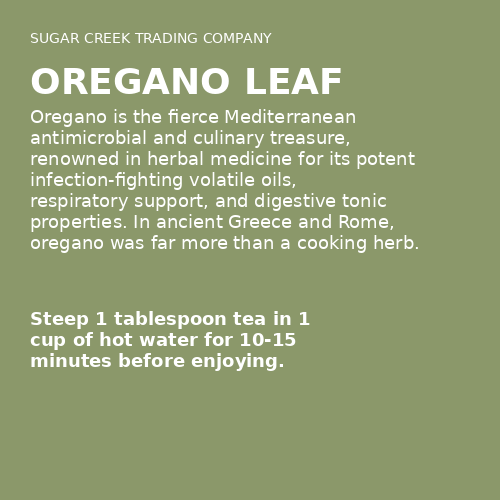
The fierce Mediterranean antimicrobial and culinary treasure, renowned in herbal medicine for its potent infection-fighting volatile oils, respiratory support, and digestive tonic properties.
BOTANICAL IDENTIFICATION
Scientific Name: Origanum vulgare L.
Common Names: Oregano, Wild Marjoram, Mountain Mint, Joy of the Mountain, Oregano Leaf, Dostenkraut (German), Origan (French), Rigani (Greek)
Family: Lamiaceae (Mint family)
Origanum vulgare is a hardy, aromatic perennial herb growing 20 to 80 cm tall with square, often reddish stems, small opposite oval leaves, and clusters of tiny pink to purple tubular flowers arranged in terminal panicles. The entire aerial portion of the plant is covered in glandular trichomes (oil glands) that release its characteristic warm, pungent, camphoraceous aroma when touched. The leaves are the primary medicinal and culinary part, though the flowering tops are also used in traditional preparations.
Native to the Mediterranean region, temperate Western and Southwestern Eurasia, and parts of Central Asia, oregano thrives on dry, rocky, calcareous hillsides and meadows in full sun. It has naturalized throughout much of Europe and North America and is widely cultivated as both a culinary herb and a medicinal crop. Major commercial production occurs in Turkey, Greece, Mexico, and the United States.
CULTURAL AND HISTORICAL USE
Oregano's name derives from the Greek "oros ganos," meaning "joy of the mountain," a reference to its profuse growth on sunlit Mediterranean hillsides and the delight it brought to those who encountered its fragrance. In ancient Greece and Rome, oregano was far more than a cooking herb. Hippocrates used it as an antiseptic and a remedy for respiratory and digestive complaints. Dioscorides prescribed it in his De Materia Medica for venomous bites, digestive disorders, and coughs. The Greeks believed oregano was created by the goddess Aphrodite as a symbol of happiness, and it was traditionally woven into wedding crowns and planted on graves to ensure the peace of the departed.
In medieval European herbalism, oregano was a staple of monastery physic gardens. Hildegard von Bingen and other medieval herbalists recommended it for coughs, digestive weakness, and skin conditions. It was widely used as a strewing herb to purify the air in sickrooms and was burned as fumigant during plague outbreaks, a practice with genuine antimicrobial rationale given what we now know about its volatile oils. In the folk medicine traditions of rural Italy, Greece, and Turkey, oregano tea remains a first-line household remedy for colds, flu, sore throats, and upset stomachs.
Oregano's culinary prominence exploded in the United States after World War II, when soldiers returning from the Mediterranean brought home a taste for Italian and Greek cuisine. Today oregano is among the most popular culinary herbs worldwide. In Mexican and Central American traditional medicine, oregano (often the related species Lippia graveolens, known as Mexican oregano) is used for respiratory infections, menstrual cramps, and gastrointestinal parasites. The modern resurgence of interest in oregano as a medicinal herb has been driven largely by research into the antimicrobial potency of its essential oil, particularly its primary constituents carvacrol and thymol.
KEY BIOACTIVE COMPOUNDS & BENEFITS
| Compound/Class | Location in Plant | Human Benefit | Role in Plant |
|---|---|---|---|
| Carvacrol | Glandular trichomes (essential oil, 60-80% of oil content) | Broad-spectrum antibacterial, antifungal, antiparasitic, anti-inflammatory activity | Monoterpene phenol serving as the plant's primary chemical defense against pathogens and herbivores |
| Thymol | Glandular trichomes (essential oil) | Antiseptic, expectorant, antispasmodic, antioxidant activity | Isomeric phenol complementing carvacrol in the plant's antimicrobial defense system |
| Rosmarinic acid | Leaf tissue | Potent antioxidant, anti-inflammatory, antiallergic, and antiviral effects | Phenolic compound that protects leaf tissue from UV radiation and oxidative stress |
| Terpinene, p-cymene, and other monoterpenes | Essential oil | Enhance cellular penetration of carvacrol and thymol; independent antimicrobial and anti-inflammatory activity | Volatile terpenes that contribute to the plant's aromatic insect-repellent profile |
| Flavonoids (apigenin, luteolin, quercetin derivatives) | Leaf tissue | Antioxidant, anti-inflammatory, and antispasmodic support | UV-protective and pollinator-attracting phenolic pigments |
Oregano's extraordinary antimicrobial reputation rests primarily on its high carvacrol and thymol content, two phenolic monoterpenes that disrupt microbial cell membranes and have demonstrated activity against a remarkable range of bacteria, fungi, yeasts, and parasites in laboratory studies. These compounds are supported by rosmarinic acid, one of the most potent natural antioxidants known, and by a suite of terpenes and flavonoids that contribute anti-inflammatory and tissue-protective effects. The result is an herb whose chemistry has been validated as genuinely antimicrobial by modern science after millennia of empirical use.
HOW IT WORKS IN THE BODY
Oregano's pharmacological actions center on its antimicrobial, anti-inflammatory, respiratory, and digestive effects, with emerging research highlighting antioxidant and metabolic benefits.
Antimicrobial and Antifungal Action:
Carvacrol and thymol exert their antimicrobial effects primarily by disrupting the lipid bilayer of microbial cell membranes, increasing permeability and causing leakage of cellular contents. This membrane-disruptive mechanism makes it difficult for organisms to develop resistance, a significant advantage over conventional antibiotics. In vitro studies have demonstrated activity against Escherichia coli, Staphylococcus aureus (including MRSA), Salmonella, Candida albicans, Aspergillus species, and various intestinal parasites including Giardia and Blastocystis. While in vivo human clinical data is more limited, preliminary trials and extensive traditional use support oregano's role as a natural antimicrobial agent.
Respiratory and Expectorant Support:
Oregano's volatile oils act as natural expectorants, stimulating the mucociliary escalator and promoting the thinning and expulsion of bronchial mucus. Carvacrol has demonstrated antitussive (cough-suppressing) activity in animal models, while thymol acts as a bronchial antispasmodic, relaxing smooth muscle in the airways. Rosmarinic acid contributes anti-inflammatory and antiallergic effects that reduce airway hypersensitivity. This combination makes oregano particularly effective for productive coughs, bronchitis, and upper respiratory infections.
Digestive Tonic and Carminative:
Oregano stimulates the secretion of digestive enzymes and bile, promoting efficient digestion of fats and proteins. Its carminative volatile oils relax intestinal smooth muscle, relieving gas, bloating, and cramping. The antimicrobial action extends to the digestive tract, where oregano may help address small intestinal bacterial overgrowth (SIBO) and intestinal dysbiosis. A 2000 study published in Phytotherapy Research found that oregano oil supplementation resolved enteric parasites in the majority of treated patients.
Antioxidant and Anti-Inflammatory Protection:
Oregano consistently ranks among the highest antioxidant-capacity herbs in comparative studies, with ORAC values exceeding those of most fruits and vegetables. Rosmarinic acid inhibits NF-kB activation and reduces the production of pro-inflammatory cytokines, while carvacrol suppresses COX-2 expression. This broad anti-inflammatory and antioxidant activity provides systemic cellular protection relevant to chronic disease prevention.
DOSE GUIDELINES
| Preparation Type | Typical Dose | Purpose |
|---|---|---|
| Dried leaf tea/infusion | 1-3 g (1-2 teaspoons) steeped in hot water for 10-15 minutes, 2-3 times daily | Digestive support, respiratory relief, general antimicrobial and antioxidant intake |
| Dried leaf powder (culinary/capsule) | 2-4 g daily in food or capsules | Sustained antioxidant and digestive support |
| Tincture (1:5, 45% ethanol) | 2-4 mL, 3 times daily | Concentrated antimicrobial and respiratory support |
| Oregano essential oil (enteric-coated capsules) | 100-200 mg emulsified oil, 2-3 times daily with meals (short-term) | Targeted intestinal antimicrobial action (SIBO, parasites, candida) |
For general wellness, oregano leaf tea or culinary use provides gentle, sustained benefits suitable for long-term daily consumption. For acute infections or targeted antimicrobial applications, more concentrated preparations such as tinctures or essential oil capsules may be used for short periods (typically 2-6 weeks), ideally under the guidance of a qualified herbalist or healthcare provider. The whole dried leaf provides a gentler, broader-spectrum effect than isolated essential oil and is the most appropriate form for everyday use.
PREPARATION AND USES
Dried oregano leaf is one of the most familiar and versatile herbs in the kitchen, and its medicinal preparation is equally straightforward. For a therapeutic tea, steep one to two teaspoons of dried leaf in a cup of boiling water, covered, for 10-15 minutes. Covering the cup is important to prevent the volatile oils from escaping with the steam. The resulting tea is aromatic, slightly bitter, and warming. For sore throats, the warm tea can be used as a gargle before swallowing. Honey and lemon make excellent additions for respiratory complaints.
In culinary use, oregano is a foundation herb of Mediterranean, Mexican, and Middle Eastern cuisines, essential to tomato sauces, pizza, grilled meats, roasted vegetables, bean dishes, and salad dressings. Regular culinary use provides a meaningful baseline of antioxidant and antimicrobial intake. For more concentrated therapeutic preparations, dried oregano can be tinctured in alcohol or vinegar, or infused into olive oil for both culinary and topical applications. An oregano-infused oil can be applied externally for fungal skin conditions, insect bites, and minor wounds.
OPTIMAL CONTEXT FOR USE
Oregano leaf is especially well-suited for individuals experiencing:
Acute upper respiratory infections, coughs, bronchitis, sore throats, or sinus congestion where antimicrobial and expectorant support is desired
Digestive complaints including bloating, gas, sluggish digestion, or suspected intestinal dysbiosis
Recurrent fungal infections (candidiasis, athlete's foot) or concerns about intestinal parasites
A desire for high-antioxidant daily dietary intake to support overall cellular health and chronic disease prevention
Travel to regions where foodborne and waterborne infections are a concern, as a natural digestive and antimicrobial safeguard
Oregano combines synergistically with thyme for enhanced respiratory antimicrobial action, with garlic for broad-spectrum infection support, with peppermint for digestive relief, and with rosemary for antioxidant and cognitive benefits. Its warm, savory flavor integrates easily into both medicinal and culinary preparations.
SUSTAINABILITY AND ETHICAL HARVESTING
Oregano is widely cultivated as an agricultural crop and presents no conservation concerns. It is an exceptionally hardy, drought-tolerant, and low-input plant that thrives in poor soils without heavy irrigation or chemical inputs, making it one of the more ecologically sustainable herbs in commercial production. Wild oregano continues to be sustainably harvested in Mediterranean hillside ecosystems where it grows abundantly, though cultivation provides the majority of commercial supply.
The plant's vigorous growth habit and ability to self-seed mean that well-managed oregano fields can produce for many years with minimal replanting. Organic production is common and straightforward given oregano's natural pest resistance, largely conferred by the same volatile oils that make it medicinally valuable. Sugar Creek Trading Company sources quality dried oregano leaf with attention to potency, purity, and responsible growing practices.
SAFETY AND CAUTIONS
Oregano leaf used as a culinary herb or moderate-strength tea has an excellent safety profile and thousands of years of safe daily use across Mediterranean cultures.
Individuals with allergies to Lamiaceae (mint family) plants, including basil, thyme, lavender, and sage, may have cross-reactivity with oregano. Discontinue use if skin rash, itching, or respiratory symptoms develop.
Concentrated oregano essential oil is significantly more potent than the whole dried herb and should not be taken internally without proper dilution and guidance. Undiluted oregano oil can cause burns to mucous membranes and skin irritation. The dried leaf form sold here is gentle and appropriate for everyday use.
Oregano may have mild blood-thinning effects at very high doses. Individuals on anticoagulant medications should exercise awareness, though normal culinary and tea doses are not a concern.
Oregano is safe at culinary doses during pregnancy. However, concentrated preparations (essential oil, high-dose supplements) should be avoided during pregnancy due to potential uterine-stimulating effects at very high concentrations. Moderate tea use is generally considered safe.
REFERENCES
Force, M., Sparks, W.S., & Ronzio, R.A. "Inhibition of Enteric Parasites by Emulsified Oil of Oregano In Vivo." Phytotherapy Research, 2000; 14(3): 213-214.
Baser, K.H.C. "Biological and Pharmacological Activities of Carvacrol and Carvacrol Bearing Essential Oils." Current Pharmaceutical Design, 2008; 14(29): 3106-3119.
Leyva-Lopez, N., Gutierrez-Grijalva, E.P., Vazquez-Olivo, G., & Heredia, J.B. "Essential Oils of Oregano: Biological Activity beyond Their Antimicrobial Properties." Molecules, 2017; 22(6): 989.
Singletary, K. "Oregano: Overview of the Literature on Health Benefits." Nutrition Today, 2010; 45(3): 129-138.
FINAL NOTE
Oregano leaf is that rare herb whose kitchen familiarity belies genuinely extraordinary medicinal potency. Its volatile oils represent one of nature's most effective antimicrobial systems, validated by both millennia of traditional use and modern laboratory research, while its rosmarinic acid content places it among the most antioxidant-rich botanicals available. Whether sipped as a warming tea during cold season, sprinkled generously over a Mediterranean meal, or used therapeutically to support respiratory and digestive health, oregano delivers a depth of benefit that earns its ancient Greek name: the joy of the mountain.
Share