Sugar Creek Trading Company
Rose Buds Red
Rose Buds Red
Impossible de charger la disponibilité du service de retrait
Rosa spp.
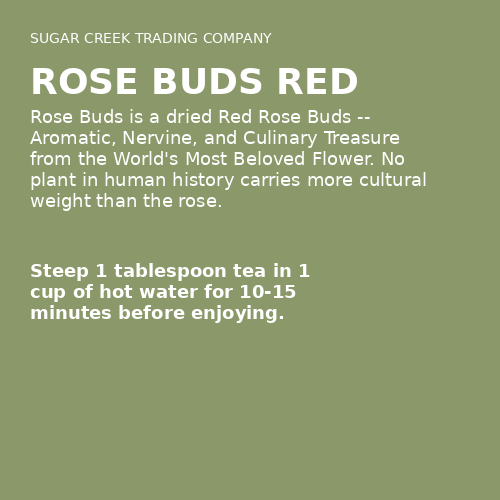
Dried Red Rose Buds -- Aromatic, Nervine, and Culinary Treasure from the World's Most Beloved Flower
Botanical Identification
- Latin Name: Rosa spp. (primarily Rosa damascena, Rosa centifolia, and Rosa gallica)
- Common Names: Red Rose Buds, Rose Petals, Damask Rose, Apothecary Rose, Cabbage Rose
- Family: Rosaceae (Rose family)
- Part Used: Whole dried buds (harvested just before full bloom)
- Origin: Cultivated across temperate zones worldwide; traditional sources include Iran, Turkey, Bulgaria, Morocco, India, and China
- Form: Whole dried red rose buds
- Distinguishing Note: These are whole dried buds harvested at the moment of maximum aromatic potency -- just before the flower opens fully. The tight bud form preserves essential oils, color pigments, and bioactive compounds far better than loose petals. Red rose buds serve a triple purpose: they are a nervine herb in traditional medicine, a prized aromatherapy material, and a versatile culinary ingredient with a flavor profile that bridges floral, fruity, and faintly astringent notes.
Cultural and Historical Use
No plant in human history carries more cultural weight than the rose. Archaeological evidence places rose cultivation in Persia as early as 5,000 years ago, and the flower has been central to medicine, perfumery, cuisine, and spiritual practice across virtually every civilization that encountered it.
In traditional Persian medicine (Unani-Tibb), rose preparations -- particularly rosewater (gulab) and rose conserve (gulkand) -- are classified as cooling, moistening remedies for conditions of excess heat: inflammation, fever, headache, eye irritation, and emotional agitation. The great Persian physician Avicenna (Ibn Sina) described rose extensively in his Canon of Medicine, recommending rose preparations for heart palpitations, melancholy, and digestive inflammation.
In Ayurvedic medicine, rose (known as shatapari or gulab) is considered tridoshic -- balancing to all three doshas -- and is prescribed for pitta-related conditions including skin inflammation, acid indigestion, and emotional heat. The Ayurvedic rose preparation gulkand (rose petal jam) remains a staple of Indian wellness practice.
Traditional Chinese Medicine classifies rose buds (mei gui hua) as herbs that regulate Liver Qi, relieve constraint, and harmonize the blood. They are prescribed for emotional stagnation, irritability, menstrual irregularity, and digestive discomfort arising from stress.
European herbalism from the medieval period through the Renaissance relied heavily on the Apothecary Rose (Rosa gallica var. officinalis), using rose preparations for sore throat, wound healing, eye inflammation, and as a vehicle for other medicines. Rose hip preparations later became famous as a wartime vitamin C source in Britain during World War II.
Key Bioactive Compounds
| Compound / Class | Description | Primary Activity |
|---|---|---|
| Citronellol, Geraniol, Nerol | Monoterpene alcohols (essential oil components) | Anxiolytic; antibacterial; the signature aromatic compounds of rose scent |
| Beta-damascenone | Norisoprenoid ketone | Potent aroma compound; contributes to rose's distinctive deep, honeyed scent even at trace levels |
| Quercetin and Kaempferol | Flavonol glycosides | Antioxidant; anti-inflammatory; antihistamine |
| Anthocyanins (cyanidin glycosides) | Flavonoid pigments | Responsible for red color; antioxidant; vascular protective |
| Gallic acid and Ellagic acid | Phenolic acids | Antioxidant; anti-inflammatory; antimicrobial |
| Tannins (hydrolyzable) | Polyphenolic compounds | Mild astringent; anti-diarrheal; wound healing support |
| Vitamin C (residual) | Ascorbic acid | Antioxidant; immune support (higher in fresh; partially preserved in dried buds) |
How It Works in the Body
Rose buds operate through two primary pathways: aromatic (via volatile essential oil compounds) and systemic (via ingested polyphenols and flavonoids).
Aromatherapy Pathway: The volatile compounds in rose -- particularly citronellol, geraniol, and beta-damascenone -- interact with olfactory receptors and directly influence limbic system activity. Clinical studies published in Complementary Therapies in Clinical Practice and the Iranian Journal of Nursing and Midwifery Research demonstrate that rose aroma inhalation significantly reduces anxiety scores, lowers cortisol levels, and improves sleep quality. The anxiolytic effect appears to involve GABAergic modulation and serotonin pathway activation, explaining rose's traditional classification as a nervine herb.
Internal Pathway: When consumed as tea, the flavonoids quercetin and kaempferol provide anti-inflammatory and antioxidant effects. The mild astringent tannins support digestive comfort by toning the mucous membranes of the gastrointestinal tract. Gallic acid demonstrates antimicrobial activity against common gastrointestinal pathogens. The anthocyanin pigments contribute to vascular protection and have shown anti-platelet activity in laboratory studies.
In traditional energetic frameworks, rose is classified as cooling and drying (with a secondary moistening action via its aromatic oils). This dual nature -- astringent yet soothing, calming yet uplifting -- makes rose one of the most versatile herbs in the materia medica for emotional and digestive support.
Dose Guidelines
| Preparation | Amount | Directions |
|---|---|---|
| Rose Bud Tea | 4-6 whole buds (or 1-2 teaspoons) per 8 oz water | Pour water just off the boil (195-205 F) over buds. Steep 5-10 minutes, covered, to retain volatile oils. Drink 2-3 cups daily. |
| Strong Infusion (medicinal) | 8-10 buds per 8 oz | Steep 15-20 minutes, covered. For digestive support, emotional distress, or menstrual discomfort. |
| Aromatherapy | Small bowl of buds | Place dried buds in a bowl near bedside, in a sachet, or add to a warm bath. Crush slightly to release volatile oils. |
| Culinary | To taste | Infuse into syrups, honey, sugar, or cream. Add to baked goods, jams, and Middle Eastern or Indian dishes. |
| Facial Steam | Handful of buds in a bowl of hot water | Drape towel over head and bowl; steam face for 5-10 minutes for pore opening and aromatic therapy. |
Preparation and Uses
- Rose Tea: A gentle, fragrant infusion on its own or blended with green tea, lavender, chamomile, or lemon balm. The flavor is delicately floral with a faint astringency and a lingering sweetness.
- Rose Syrup (Gulkand base): Layer dried rose buds with sugar or honey in a jar; allow to macerate for several weeks. The resulting aromatic syrup is used in Middle Eastern and South Asian beverages, desserts, and traditional medicine.
- Rose-Infused Honey: Pack dried buds into raw honey and infuse for 2-4 weeks. Strain or leave buds in. Use as a throat soother, tea sweetener, or toast topping.
- Culinary Garnish and Ingredient: Add whole buds to rice dishes (Persian-style), steep into cream for rose-flavored desserts, incorporate into spice blends (ras el hanout, advieh), or float in cocktails and mocktails.
- Bath and Body: Add to bath water for a luxurious aromatic soak. Include in homemade sachets, potpourri, and drawer fresheners. Use in facial steams for skin-soothing aromatherapy.
- Herbal Blending: Rose buds complement nervine and heart-tonic herbs beautifully. Classic pairings include rose + hawthorn (heart), rose + lavender (anxiety), rose + chamomile (sleep), and rose + hibiscus (cooling summer tea).
Optimal Context for Use
- For emotional support during grief, heartbreak, anxiety, or emotional overwhelm -- rose is the traditional "herb of the heart" across multiple systems of medicine
- As a gentle nervine for daily stress reduction without sedation
- For menstrual support: rose is traditionally used for cramps, PMS irritability, and hormonal mood changes
- In culinary applications where a natural floral flavor and aroma are desired
- For aromatherapy: sleep support, mood elevation, anxiety reduction
- As a mild digestive aid for stress-related stomach upset, mild nausea, or acid reflux
- In skincare routines as a facial steam, toner base, or bath herb
Sustainability and Ethical Harvesting
Rose cultivation is one of the oldest and most widespread forms of agriculture on Earth, with major production regions in Iran (the world's largest rosewater producer), Turkey (Isparta region), Bulgaria (the Rose Valley of Kazanlak), Morocco, India (particularly Rajasthan), and China. The rose industry supports millions of farming families worldwide.
Rose cultivation is generally sustainable when practiced with attention to soil health and pollinator protection. The plants are perennial, long-lived, and can be harvested annually for decades. Organic and pesticide-free sourcing is particularly important for roses destined for culinary and medicinal use, as conventional rose farming can be pesticide-intensive.
Harvesting at the bud stage -- before full bloom -- is both the traditional practice and the most efficient, as it captures maximum essential oil content and minimizes waste from petal drop.
Safety and Cautions
- Rose buds have an excellent safety profile and a millennia-long history of safe culinary and medicinal use.
- Generally recognized as safe for all ages, including during pregnancy (in standard culinary and tea quantities). Rose tea is a traditional pregnancy tea in several cultures.
- Mildly astringent -- excessive consumption may cause mild constipation in sensitive individuals. Balance with adequate water intake.
- Individuals with known allergy to Rosaceae family plants (roses, strawberries, apples, peaches) should use caution, though true rose allergy is uncommon.
- Ensure sourcing from food-grade, pesticide-free suppliers. Ornamental roses from florists or garden centers are often treated with chemicals not safe for ingestion.
- Rose essential oil is highly concentrated and should not be confused with dried rose buds. The buds contain essential oils at naturally diluted, safe levels.
- This product is sold as a botanical specimen for culinary and herbal use. It is not intended to diagnose, treat, cure, or prevent any disease.
References
- Boskabady, M. H., et al. (2011). Pharmacological effects of Rosa damascena. Iranian Journal of Basic Medical Sciences, 14(4), 295-307.
- Mohebitabar, S., et al. (2017). Therapeutic efficacy of rose oil: A comprehensive review of clinical evidence. Avicenna Journal of Phytomedicine, 7(3), 206-213.
- Hongratanaworakit, T. (2009). Relaxing effect of rose oil on humans. Natural Product Communications, 4(2), 291-296.
- Achuthan, C. R., et al. (2003). Antioxidant and hepatoprotective effects of Rosa damascena. Pharmaceutical Biology, 41(5), 357-361.
- Nowak, R., et al. (2014). Assessment of the polyphenolic composition and antioxidant activity of Rosa species. Molecules, 19(4), 4560-4580.
- Kheirabadi, G. R., et al. (2014). Comparison of the antidepressant effect of Rosa damascena extract and fluoxetine. Journal of Research in Medical Sciences, 19(2), S36.
Final Note: A dried rose bud is a quiet thing -- small, dark, tightly furled. But steep it in hot water or crush it between your fingers, and it releases a complexity that has captivated every civilization that has known it. These buds carry the aromatic legacy of Persian gardens, Ayurvedic pharmacies, Chinese apothecaries, and European monastery herbaria. They are nervine and aromatherapy and cuisine all folded into a single botanical form. Whether you are soothing a heavy heart, crafting a Middle Eastern feast, or simply filling your evening cup with something beautiful, red rose buds meet you wherever you are.
Share