Sugar Creek Trading Company
Sumac Berry
Sumac Berry
Impossible de charger la disponibilité du service de retrait
Rhus coriaria
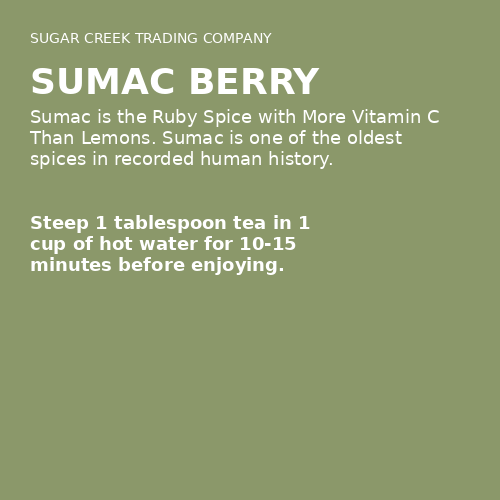
Sumac Berry — The Ruby Spice with More Vitamin C Than Lemons
Botanical Identification
- Common Names: Sumac, Sicilian Sumac, Tanner's Sumac, Elm-Leaved Sumac, Sommaq (Arabic), Sumak (Turkish)
- Latin Name: Rhus coriaria L.
- Family: Anacardiaceae (cashew family)
- Part Used: Dried ripe berries (drupes), typically ground to a coarse or fine powder
- Form: Whole dried berries or ground spice
- Origin: Native to the Mediterranean basin, Southern Europe, and the Middle East; extensively cultivated in Turkey, Iran, and the Levant
- Critical Distinction: Culinary sumac (Rhus coriaria and related edible species such as Rhus typhina — staghorn sumac) is NOT poison sumac (Toxicodendron vernix). Poison sumac produces white berries and grows in swampy habitats. Edible sumac produces distinctive deep red berry clusters and grows in dry, upland areas. They are entirely different plants despite sharing a common name.
Cultural and Historical Use
Sumac is one of the oldest spices in recorded human history. Ancient Romans used it as a souring agent before lemons were widely available in Europe — Pliny the Elder and Dioscorides both documented its culinary and medicinal uses in the 1st century CE. Dioscorides prescribed sumac for dysentery, leucorrhea, and as a gargle for sore throats. The Arabic name sommaq derives from the Aramaic word for "dark red," reflecting the spice's vivid crimson color.
Throughout the Middle East and Eastern Mediterranean, sumac has been an essential kitchen spice for millennia. It is the defining flavor of za'atar (the Levantine spice blend of sumac, thyme, sesame, and salt), a staple of Palestinian, Lebanese, Syrian, and Turkish cuisines. Fattoush salad is unthinkable without sumac's tart, fruity acidity. In Iranian cuisine, ground sumac is served as a table condiment alongside grilled kebabs, sprinkled over rice, and mixed into onion salads.
Native American peoples made extensive use of North American sumac species. Staghorn sumac (Rhus typhina) and smooth sumac (Rhus glabra) berries were steeped in cold water to produce "sumac-ade" or "Indian lemonade" — a tart, vitamin C-rich pink beverage that served as a scurvy preventive and a refreshing drink long before European contact. Cherokee, Lenape, and Iroquois nations used sumac preparations for sore throats, mouth ulcers, and diarrhea.
The tannin-rich bark and leaves of Rhus coriaria were historically used for leather tanning across the Mediterranean — the species name coriaria literally means "used in leather working."
Key Bioactive Compounds
| Compound | Concentration (approx.) | Primary Activity |
|---|---|---|
| Hydrolyzable tannins (gallotannins) | 4–25% of dry weight | Potent antioxidant, astringent, antimicrobial, alpha-glucosidase inhibition |
| Gallic acid | Major phenolic acid | Antioxidant, anti-inflammatory, anticancer |
| Anthocyanins (cyanidin-3-glucoside, delphinidin) | Significant (responsible for red color) | Antioxidant, cardiovascular protective, anti-inflammatory |
| Ascorbic acid (vitamin C) | Up to 65 mg per 100g dried berry (varies by species) | Immune support, collagen synthesis, antioxidant |
| Organic acids (malic acid, citric acid, tartaric acid) | High — responsible for sour taste | Digestive stimulation, mineral absorption enhancement, antimicrobial |
| Flavonoids (quercetin, myricetin, kaempferol) | 1–4% total | Anti-inflammatory, antioxidant, cardioprotective |
| Essential fatty acids (oleic, linoleic, palmitic) | Present in seed oil | Anti-inflammatory, skin health |
Antioxidant note: Sumac has one of the highest ORAC (Oxygen Radical Absorbance Capacity) values of any spice tested — higher than turmeric, ginger, and cinnamon. A USDA study ranked ground sumac among the top antioxidant-containing foods per serving.
How It Works in the Body
Sumac's remarkable bioactivity stems from its extraordinary concentration of hydrolyzable tannins and organic acids working in concert. The gallotannins — particularly gallic acid and its polymers — are among the most potent natural antioxidants known, scavenging free radicals with an efficiency that rivals synthetic antioxidants like BHT. These tannins also inhibit alpha-glucosidase, the intestinal enzyme that breaks down complex carbohydrates into glucose, effectively slowing post-meal blood sugar spikes. Clinical trials in type 2 diabetic patients have demonstrated that sumac supplementation (3 grams daily) significantly reduces fasting blood glucose, HbA1c, and serum malondialdehyde (a marker of oxidative stress).
The organic acid profile — dominated by malic acid — stimulates salivary and gastric secretion, improving digestive function and mineral bioavailability. Malic acid chelates minerals like iron, calcium, and magnesium, holding them in soluble form for better intestinal absorption. This mechanism partially explains sumac's traditional pairing with iron-rich grilled meats in Middle Eastern cuisine.
The anthocyanin pigments provide cardiovascular protection through multiple pathways: reducing LDL oxidation, improving endothelial function, inhibiting platelet aggregation, and modulating inflammatory cytokines. A clinical study found that sumac supplementation significantly reduced total cholesterol, LDL cholesterol, and triglycerides in hyperlipidemic patients. The astringent tannins tighten mucosal tissues, explaining sumac's traditional effectiveness for diarrhea, sore throats, and gum disease.
Dose Guidelines
| Use | Amount | Frequency | Notes |
|---|---|---|---|
| Culinary spice | 1/2 to 2 teaspoons ground sumac per dish | Daily with meals | Sprinkle freely on food as you would use lemon juice or paprika |
| Blood sugar support | 3 grams (approx. 1 teaspoon) ground sumac daily | Divided with meals | Based on clinical trial doses; use consistently for 6+ weeks |
| Sumac-ade (cold infusion beverage) | 1/4 cup whole berries per quart cold water | Steep 2–4 hours at room temp, strain through cloth | Traditional Native American preparation; tart, pink, refreshing |
| Sore throat gargle | 1 tablespoon ground sumac in 8 oz warm water | Gargle 3–4 times daily | Astringent tannins tighten inflamed throat tissue |
| Antioxidant tea | 1–2 teaspoons crushed berries per cup, steep in hot (not boiling) water 10 min | 1–3 cups daily | Excessive heat may degrade vitamin C; use water around 180 degrees F |
Preparation and Uses
- Culinary seasoning: Sumac is the definitive souring spice of Middle Eastern cuisine. Sprinkle it on hummus, grilled meats, roasted vegetables, fattoush salad, eggs, avocado toast, yogurt, and rice. It adds a bright, lemony tang with a fruity depth that citrus alone cannot provide.
- Za'atar blend: Combine equal parts ground sumac, dried thyme, and toasted sesame seeds with a pinch of salt. Mix with olive oil and spread on flatbread, or use as a dip. This is the national condiment of the Levant.
- Sumac-ade (Indian lemonade): Place 1/4 cup whole sumac berries (or 2 tablespoons ground) in a quart of cold or room-temperature water. Do not use hot water, as it extracts excessive tannins and bitterness. Steep 2 to 4 hours, then strain through fine cloth or a coffee filter to remove the fine hairs on the berries. Sweeten with honey if desired. Serve cold.
- Sumac onion salad: Thinly slice red onions, toss generously with ground sumac, a pinch of salt, and a drizzle of olive oil. Let marinate 15 to 30 minutes. Serve alongside grilled kebabs — a classic Iranian and Turkish accompaniment.
- Finishing spice: Use sumac as a finishing touch after cooking, not during, to preserve its bright color and volatile aromatic compounds. Sprinkle on dishes just before serving.
- Salad dressing: Whisk ground sumac into olive oil and lemon juice vinaigrettes for an extra layer of tart complexity.
Optimal Context for Use
- Daily antioxidant support — one of the highest-ORAC foods available, easily integrated into regular cooking
- Type 2 diabetes and metabolic syndrome — alpha-glucosidase inhibition slows post-meal glucose spikes
- Cardiovascular health — clinically demonstrated improvements in cholesterol and triglycerides
- Digestive stimulation — organic acids promote healthy gastric secretion and mineral absorption
- Sore throat, mouth sores, and gum inflammation — astringent gargle
- Diarrhea — traditional astringent remedy that tones intestinal mucosa
- Vitamin C supplementation from a whole-food source
- Replacing salt or artificial flavor enhancers with a natural, low-sodium souring agent
Sustainability and Ethical Harvesting
Sumac is a hardy, drought-tolerant shrub that thrives in poor, rocky soils where few other crops succeed. It requires minimal irrigation, no pesticides (it has few significant pest problems), and provides erosion control on marginal hillside land. In the Mediterranean and Middle East, sumac harvesting supports rural agricultural economies in regions with limited arable land. North American native sumac species (Rhus typhina, Rhus glabra) are common roadside and woodland-edge shrubs that colonize disturbed land aggressively. They are not endangered or at conservation risk. Wild harvesting is sustainable and even beneficial, as it prevents thicket overgrowth. When wildcrafting North American sumac, harvest the red berry clusters in late summer before heavy rains leach out the vitamin C and organic acids. Ensure positive identification — the red, upright, fuzzy berry clusters of edible sumac are unmistakable once learned, and bear no resemblance to the drooping white berries of poison sumac.
Safety and Cautions
- Poison sumac confusion: This must be stated clearly. Culinary sumac (Rhus coriaria, Rhus typhina, Rhus glabra) produces bright red berries in upright cone-shaped clusters and grows in dry, well-drained soils. Poison sumac (Toxicodendron vernix) produces drooping clusters of white or pale green berries and grows exclusively in wet, swampy habitats. They are different genera. If wildcrafting, learn the identification thoroughly before harvesting.
- Anacardiaceae family: Sumac is in the same botanical family as cashews, mangoes, and pistachios. Those with severe allergies to these foods should introduce sumac cautiously, though cross-reactivity with culinary sumac is uncommon.
- Tannin sensitivity: Very high doses of sumac may cause stomach upset in sensitive individuals due to tannin content. Taking with food mitigates this.
- Iron absorption: Tannins can inhibit non-heme iron absorption when consumed in very large amounts. Those with iron-deficiency anemia should not consume large amounts of sumac at the same time as iron supplements or iron-rich plant foods. Moderate culinary use is not a concern.
- Blood sugar medications: Due to alpha-glucosidase inhibition and glucose-lowering effects, those on insulin, metformin, or sulfonylureas should monitor blood sugar when adding significant amounts of sumac to their diet.
- Blood thinners: Sumac's flavonoids may have mild antiplatelet effects. Those on warfarin or other anticoagulants should maintain consistent intake and inform their prescriber.
- Pregnancy: Culinary use is considered safe during pregnancy. There are no documented adverse effects at normal food-level intake.
References
- Shabana, M.M. et al. (2011). Antihyperglycemic activity of Rhus coriaria in alloxan-induced diabetic rats. Journal of Ethnopharmacology, 137(1), 690–694.
- Shidfar, F. et al. (2014). The effect of sumac (Rhus coriaria L.) powder on serum glycemic status, ApoB, ApoA-I, and total antioxidant capacity in type 2 diabetic patients. Iranian Journal of Pharmaceutical Research, 13(4), 1249–1255.
- Kosar, M. et al. (2007). Antioxidant activity and phenolic composition of sumac (Rhus coriaria L.) extracts. Food Chemistry, 103(3), 952–959.
- Abu-Reidah, I.M. et al. (2015). HPLC-DAD-ESI-MS/MS screening of bioactive components from Rhus coriaria L. (sumac) fruits. Food Chemistry, 166, 179–191.
- Kossah, R. et al. (2009). Antimicrobial and antioxidant activities of Chinese sumac (Rhus typhina L.) fruit extract. Food Control, 20(10), 910–915.
- Moerman, D.E. (1998). Native American Ethnobotany. Timber Press. Entries on Rhus species.
Final Note
Sumac is one of those rare spices that is simultaneously an ancient culinary treasure and a clinically relevant medicinal food. Its antioxidant density is extraordinary — rivaling any berry or spice on Earth — and its blood sugar-regulating potential is backed by real clinical data, not just folklore. Use it as freely as you would use lemon juice or black pepper. Toss it on salads, grilled meats, and roasted vegetables. Make sumac-ade on hot summer days. Mix it into za'atar and eat it on warm bread with olive oil. The more you use it, the more indispensable it becomes. And rest easy — if the berries are red and the clusters point up, it is not poison sumac. This product is sold as a culinary spice and dietary ingredient. It is not intended to diagnose, treat, cure, or prevent any disease.
Share