Sugar Creek Trading Company
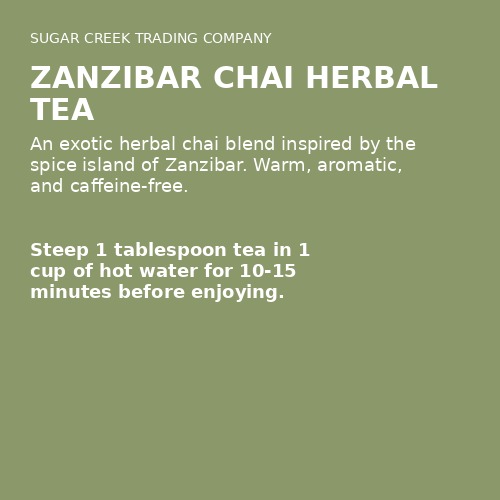
Zanzibar Chai Herbal Tea
Zanzibar Chai Herbal Tea
Impossible de charger la disponibilité du service de retrait
ZANZIBAR CHAI HERBAL TEA
(Spice–Nervine–Digestive Harmonizing Formula)
Formula Type: Multi-herb infusion (herbal tea)
Primary Actions: Nervine calming, digestive stimulation, circulatory warming, aromatic carminative
Energetics: Warming with cooling aromatic balance; gently stimulating and relaxing
Taste: Sweet–spicy, aromatic, mildly bitter, citrus-bright
Ingredients:
Passion Flower, Mkanjuki, Basil, Ginger, Vanilla, Allspice, Peppermint, Fennel, Fenugreek, Lemongrass, Hibiscus Flower, Cinnamon Leaf, Clove, Nutmeg, Orange Peel, Cardamom
FORMULA IDENTIFICATION & STRUCTURE
Zanzibar Chai Herbal Tea is a complex, culturally inspired polyherbal formula drawing from East African, Indian Ocean, South Asian, and Arab spice traditions. Unlike stimulant-based chai (which relies on black tea or coffee), this blend is caffeine-free, relying instead on aromatic spices, nervines, and digestive herbs to create warmth, clarity, and calm.
The formula is structured around:
-
Nervine grounding (Passion Flower, Basil)
-
Digestive fire & carminatives (Ginger, Fennel, Cardamom, Peppermint)
-
Circulatory warmth & antimicrobial spices (Clove, Cinnamon Leaf, Allspice, Nutmeg)
-
Aromatic uplift & citrus brightness (Orange Peel, Lemongrass, Vanilla)
-
Mineral–acid balance & cooling contrast (Hibiscus)
-
Metabolic and nutritive support (Fenugreek)
Mkanjuki (regional/local name) contributes additional traditional depth and should be identified botanically at the sourcing level; it is treated here as a regional tonic/spice component.
TRADITIONAL AND ETHNOBOTANICAL CONTEXT
This formula reflects the Indian Ocean trade route pharmacopeia, where spices, nervines, and digestive herbs moved freely between East Africa (Zanzibar), Arabia, India, and Southeast Asia.
Historically, such blends were used to:
-
Aid digestion after meals
-
Support circulation and warmth
-
Calm the nerves without sedation
-
Prevent infection and foodborne illness
-
Serve as social, ceremonial, and restorative drinks
Unlike single-herb teas, chai-style formulas function as harmonizers—supporting multiple systems gently and synergistically rather than targeting one acute condition.
KEY CONSTITUENTS & FORMULA LOGIC
| Ingredient Group | Representative Herbs | Role in Formula | Human Benefits |
|---|---|---|---|
| Nervines | Passion Flower, Basil | Nervous system modulation | Calm focus, stress relief |
| Carminatives | Fennel, Peppermint, Cardamom | Digestive gas dispersion | Reduced bloating, comfort |
| Warming spices | Ginger, Clove, Cinnamon Leaf, Allspice, Nutmeg | Circulatory stimulation | Warmth, antimicrobial action |
| Aromatics | Vanilla, Lemongrass, Orange Peel | Sensory and mood uplift | Pleasant flavor, mild anxiolysis |
| Acids & minerals | Hibiscus | Cooling balance | Cardiovascular and antioxidant support |
| Nutritive/metabolic | Fenugreek | Glycemic and digestive support | Satiety, metabolism balance |
The formula is self-balancing: warming spices are buffered by cooling aromatics and nervines, preventing overstimulation.
HOW THE FORMULA WORKS IN THE BODY
Digestive System:
Carminative and bitter-aromatic herbs stimulate gastric secretions, bile flow, and peristalsis, while reducing gas and cramping. This makes the tea ideal before or after meals.
Nervous System:
Passion Flower and Basil gently calm sympathetic overdrive, preventing the stimulating spices from becoming agitating. The result is alert relaxation rather than sedation.
Circulatory & Immune Support:
Spices such as ginger, clove, cinnamon leaf, and allspice improve peripheral circulation and exhibit broad antimicrobial activity, historically important in warm climates.
Metabolic Balance:
Fenugreek and warming spices support glucose regulation and digestive efficiency, especially helpful for post-meal lethargy.
ACTIONS AND INDICATIONS
Zanzibar Chai Herbal Tea functions as a:
-
Digestive tonic
-
Nervine relaxant (non-sedating)
-
Circulatory stimulant
-
Aromatic adaptogenic-style blend
-
Social and ceremonial beverage
It is indicated for:
-
Digestive discomfort, bloating, sluggish digestion
-
Stress with digestive tension
-
Cold constitution or poor circulation
-
Afternoon fatigue without caffeine
-
Social grounding and ritual use
PREPARATION AND DOSAGE
| Form | Preparation | Suggested Use | Notes |
|---|---|---|---|
| Infusion | 1–2 tsp per cup hot water, steep 10–15 min | 1–3 cups daily | Cover while steeping |
| Decoction–Infusion hybrid | Simmer hard spices 10 min, add soft herbs last | As needed | Deeper extraction |
| Iced tea | Double-strength infusion, chilled | As desired | Refreshing, still effective |
| Milk infusion | Prepare with plant or dairy milk | Occasional | Traditional chai-style |
Sweetening with honey or dates enhances the warming and nervine effects.
SAFETY, CONTRAINDICATIONS, AND TOXICITY
This formula is very safe for general use.
Cautions:
-
Use moderation in pregnancy due to spice density (occasional use acceptable; daily medicinal dosing not advised)
-
Individuals with GERD or heat conditions may prefer shorter steep times
-
Those on sedative medications should note Passion Flower’s mild potentiation (clinically minimal in tea form)
General Toxicological Reference (LD₅₀ – Formula Context)
-
Individual herbs (tea-strength infusions):
All listed botanicals have reported oral LD₅₀ values >2,000–5,000 mg/kg for whole-plant materials -
Formula-level risk:
At infusion concentrations, toxicity risk is negligible; the limiting factor is sensory tolerance, not pharmacological toxicity.
Clinical relevance:
This is a food-medicine formula, not a concentrated extract. Safety margin is extremely wide.
QUALITY, SOURCING, AND ETHICS
Quality depends on:
-
Fresh, aromatic spices (volatile oils intact)
-
Correct identification of Mkanjuki at source
-
Clean, mold-free storage
Ethical sourcing honors the Swahili, Indian Ocean, and South Asian traditions from which this flavor–medicine lineage arises.
SUMMARY
Zanzibar Chai Herbal Tea is medicine through pleasure—warming without aggression, calming without dullness, stimulating without depletion. It supports digestion, circulation, and nervous balance while functioning as a ritual beverage that invites connection.
In a world of single-compound interventions, this formula reminds us that harmony itself can be therapeutic. Its intelligence lies not in dominance, but in orchestration—many voices, one coherent experience.
Share