Sugar Creek Trading Company
Erbe di Provenza senza sale
Erbe di Provenza senza sale
Impossibile caricare la disponibilità di ritiro
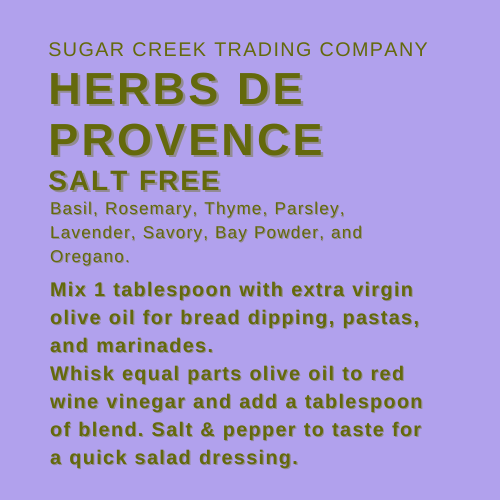
HERBES DE PROVENCE — SALT FREE
The classic aromatic blend of southern France in its purest form, delivering the full spectrum of Provencal herb flavor without any added sodium, perfect for those managing salt intake without sacrificing culinary depth.
BOTANICAL IDENTIFICATION
Blend Components: Thymus vulgaris (Thyme), Rosmarinus officinalis (Rosemary), Satureja hortensis (Summer Savory), Origanum majorana (Marjoram), Lavandula angustifolia (Lavender), Origanum vulgare (Oregano)
Common Names: Herbs de Provence Salt Free, Provencal Herb Blend (No Salt), Herbes de Provence Unsalted
Family: Lamiaceae (Mint family) -- all primary components
This salt-free version of Herbs de Provence contains the same traditional aromatic herbs that grow wild and in cultivation across the limestone garrigue of southeastern France, without the addition of salt that is found in some commercial formulations. Each component is a low-growing perennial or annual herb in the mint family, characterized by square stems, opposite leaves, and dense volatile oil glands that produce the intensely aromatic essential oils responsible for the blend's unmistakable fragrance. The plants share an affinity for dry, rocky, alkaline soils and full Mediterranean sun, conditions that stress the plants just enough to concentrate their essential oil production and maximize flavor intensity.
While the individual herbs are native to the Mediterranean basin and have been gathered from the wild scrublands of Provence for centuries, the standardized commercial blend known as "Herbes de Provence" was codified in the 1970s by French spice companies. This salt-free formulation preserves the traditional herb-only character of the blend, allowing the cook to control sodium content independently. Today, these herbs are cultivated across southern Europe, North Africa, and temperate regions worldwide.
CULTURAL AND HISTORICAL USE
The herbs that compose this blend have been fundamental to Mediterranean cooking and medicine for thousands of years. Ancient Greek and Roman physicians including Dioscorides, Pliny the Elder, and Galen documented the use of thyme, rosemary, savory, and marjoram as both culinary seasonings and therapeutic agents. Thyme was burned as temple incense in Greece and used for embalming in Egypt. Rosemary was sacred to Aphrodite and carried at funerals as a symbol of remembrance. Savory was planted widely across Roman colonies as both a cooking herb and a purported aphrodisiac. Marjoram, called "joy of the mountains" (oros ganos) in Greek, was woven into wedding crowns to bless new marriages.
In traditional Provencal kitchens, these herbs were never premixed from jars but gathered in loose handfuls from the garden or hillside and added directly to the pot. They formed the aromatic foundation of the region's most iconic dishes: daubes of beef or lamb braised slowly in red wine, grilled fish rubbed with herb paste, ratatouille fragrant with summer vegetables, and the herb-crusted roasts served at every family table. The presence of lavender in authentic Provencal blends distinguishes them from generic Italian or Greek herb mixtures and reflects the plant's omnipresence in the Provencal landscape, where its purple fields define the visual identity of the region.
The salt-free formulation has particular relevance in the modern dietary landscape, where the average adult consumes far more sodium than recommended. The World Health Organization recommends fewer than 2,000 milligrams of sodium per day, yet most Western diets exceed this by 50 to 100 percent. By providing intense, complex flavor without sodium, this blend allows individuals on low-sodium diets, those managing hypertension, or anyone seeking to reduce salt intake to maintain the full pleasure and health benefits of herb-forward cooking.
KEY BIOACTIVE COMPOUNDS & BENEFITS
| Compound/Class | Location in Plant | Human Benefit | Role in Plant |
|---|---|---|---|
| Thymol and carvacrol (phenolic monoterpenes) | Thyme, savory, oregano | Potent antimicrobial, antifungal, and antioxidant; support respiratory and digestive health | Defense against microbial pathogens and herbivorous insects |
| Rosmarinic acid (polyphenol) | Rosemary, marjoram, thyme | Anti-inflammatory, antioxidant; protects cells from oxidative damage and supports joint health | UV protection and antimicrobial defense in leaf tissue |
| Carnosic acid and carnosol (diterpenes) | Rosemary | Neuroprotective, antioxidant; support cognitive function, memory, and healthy aging | Protects leaf tissue from oxidative stress under intense sunlight |
| Linalool and linalyl acetate (monoterpene alcohols) | Lavender | Anxiolytic, calming, sleep-promoting; reduce nervous tension and support relaxation | Pollinator attraction and antimicrobial defense |
| Ursolic acid (triterpene) | Thyme, rosemary, marjoram | Anti-inflammatory; supports healthy blood sugar metabolism, muscle preservation, and cardiovascular health | Waxy leaf cuticle component providing drought resistance |
The combined phytochemistry of this salt-free blend delivers a broad-spectrum antioxidant and anti-inflammatory profile with every use. The synergy between thymol's antimicrobial power, rosmarinic acid's anti-inflammatory action, rosemary's neuroprotective diterpenes, and lavender's calming linalool creates a seasoning that enhances food flavor, aids digestion, preserves food from microbial spoilage, and provides meaningful quantities of protective plant compounds. Without added salt, the herb flavors are more prominent and the blend is more versatile, allowing the cook to season to taste without inadvertently exceeding sodium targets.
HOW IT WORKS IN THE BODY
When consumed as a culinary seasoning, the bioactive compounds in this salt-free blend exert their effects across multiple organ systems, even at the modest doses typical of food use.
Digestive Support and Antimicrobial Activity:
Thymol, carvacrol, and the volatile oils present in thyme, savory, and oregano stimulate the secretion of gastric juices and bile, promoting efficient digestion of proteins and fats. These same compounds have well-documented antimicrobial activity against common foodborne pathogens including E. coli, Salmonella, and Listeria, which is why these herbs became integral to the cuisine of warm Mediterranean climates long before refrigeration. The carminative properties of marjoram and savory help relax smooth muscle in the gastrointestinal tract, reducing bloating, cramping, and gas.
Cardiovascular Support (Salt-Free Advantage):
By replacing salt with intensely flavored herbs, this blend directly supports cardiovascular health. The rosmarinic acid, ursolic acid, and flavonoids present throughout the blend provide additional cardiovascular benefits: rosmarinic acid inhibits LDL oxidation (a key step in atherosclerosis), while ursolic acid supports healthy endothelial function. Research consistently shows that populations consuming traditional Mediterranean diets rich in herbs and moderate in sodium have significantly lower rates of hypertension, stroke, and heart disease.
Antioxidant Protection:
Rosmarinic acid, carnosic acid, and the flavonoids distributed across all herbs in the blend are among the most potent dietary antioxidants measured in laboratory assays. When consumed regularly, these compounds help neutralize reactive oxygen species, reduce lipid peroxidation in cell membranes, and protect cellular DNA from oxidative damage that contributes to aging and chronic disease.
Respiratory and Nervous System Support:
The volatile essential oils, particularly thymol from thyme and eucalyptol traces from rosemary, provide expectorant and bronchodilatory effects that support respiratory health. Lavender's linalool modulates GABA receptors to produce gentle calming effects, while rosemary's carnosic acid activates the Nrf2 antioxidant pathway in brain tissue, protecting neurons and supporting memory and concentration.
DOSE GUIDELINES
| Preparation Type | Typical Dose | Purpose |
|---|---|---|
| Culinary seasoning | 1-3 teaspoons per dish, added during cooking; can be used more liberally than salted versions | Flavor enhancement and daily dietary antioxidant intake without added sodium |
| Herbal infusion (tea) | 1-2 teaspoons per cup of boiling water, steeped 10-15 minutes, covered | Digestive support, respiratory relief, gentle relaxation |
| Infused oil | 2-3 tablespoons of blend per cup of olive oil, warmed gently or infused cold for 2 weeks | Sodium-free finishing oil with concentrated herbal benefits |
| Dry rub or marinade base | 2-4 tablespoons blended with olive oil, garlic, lemon zest, and pepper | Flavorful, salt-free seasoning for meats, fish, and vegetables |
Because this blend contains no added salt, it can be used more generously than salted versions, allowing the full complexity of the herb flavors to develop in a dish. For maximum volatile oil preservation, add the herbs during the last 15 to 30 minutes of cooking for long-simmered dishes, or incorporate into dressings, marinades, and finishing applications where heat exposure is minimal. As a tea, steep in a covered vessel to trap the volatile aromatic compounds that would otherwise evaporate with the steam.
PREPARATION AND USES
This salt-free blend is exceptionally versatile and particularly valuable for anyone who wants full control over the sodium content of their food. Its classic applications include rubbing onto chicken, lamb, pork, or fish before roasting or grilling; stirring into ratatouille, tomato sauces, soups, and vegetable stews; seasoning roasted potatoes, root vegetables, and gratins; and incorporating into bread doughs, focaccia, and savory pastries. The blend is outstanding mixed with olive oil and brushed onto vegetables for grilling, whisked into vinaigrettes, or sprinkled over goat cheese and fresh mozzarella. It works beautifully in egg dishes including omelets, frittatas, and quiches.
For a soothing herbal tea, steep 1 to 2 teaspoons in boiling water for 10 to 15 minutes in a covered cup or teapot. This tea is particularly welcome after a heavy meal or in the evening when gentle relaxation is desired. To make an herb-infused olive oil, combine the herbs with quality extra-virgin olive oil in a clean glass jar, allow to infuse for two weeks in a cool dark place, shaking daily, then strain. This oil makes an exceptional sodium-free finishing drizzle for soups, pasta, bread, and roasted vegetables. For a quick herb butter alternative, blend softened unsalted butter with a generous amount of the herb mixture and a squeeze of lemon. The salt-free formulation also makes this blend ideal for homemade spice mixes, seasoning salts (where you control the salt ratio), and custom rubs.
OPTIMAL CONTEXT FOR USE
This salt-free Herbs de Provence blend is especially well-suited for individuals seeking:
A sodium-free seasoning option for managing hypertension, heart disease, kidney conditions, or any health situation requiring sodium restriction, without sacrificing the depth and complexity of well-seasoned food
Greater control over the salt content of their cooking, allowing the herbs to provide the primary flavor while salt is added separately and precisely to taste
The full antioxidant, anti-inflammatory, and digestive benefits of Mediterranean aromatic herbs through consistent daily culinary use
An authentic, high-quality Provencal herb blend for Mediterranean, French, and Southern European recipes where the herb flavors should take center stage
A versatile base ingredient for creating custom spice blends, seasoning salts, marinades, and rubs with personalized sodium levels
This blend pairs beautifully with olive oil, garlic, lemon, black pepper, and Dijon mustard. For enhanced flavor on low-sodium diets, combine with other salt-free flavor boosters including citrus zest, vinegars, freshly ground pepper, smoked paprika, and nutritional yeast.
SUSTAINABILITY AND ETHICAL HARVESTING
All of the herbs in this blend are extensively cultivated crops with abundant global supply. Thyme, rosemary, oregano, marjoram, savory, and lavender are among the most widely grown aromatic herbs in the world, cultivated commercially across the Mediterranean basin, North Africa, Eastern Europe, and the Americas. These hardy, drought-tolerant perennials require minimal irrigation and few agricultural inputs, making them relatively low-impact crops. Lavender cultivation in particular supports pollinator populations, as lavender fields are critical foraging sites for honeybees and wild bees throughout southern France and other growing regions.
None of the component herbs are listed as threatened by any conservation body. Wild harvesting from Mediterranean scrublands occurs on a small scale and has minimal ecological impact given the natural abundance and vigorous regrowth of these species. Choosing organically grown blends supports farming practices that avoid synthetic pesticides, protecting pollinators, soil health, and the consumer alike.
SAFETY AND CAUTIONS
This salt-free Herbs de Provence blend has an excellent safety profile when used in normal culinary quantities. The following notes are offered for completeness:
Individuals with known allergies to plants in the Lamiaceae (mint) family should exercise caution, though allergic reactions to these common culinary herbs are uncommon.
Rosemary in large supplemental doses (well beyond normal culinary amounts) may interact with blood-thinning medications, lithium, ACE inhibitors, and certain diabetes medications. Standard culinary use does not approach pharmacologically significant doses.
Pregnant women can enjoy this blend freely as a culinary seasoning. Cautions regarding concentrated therapeutic preparations of individual herbs (particularly rosemary and thyme essential oils) do not apply to normal food use.
This product contains no salt, making it suitable for sodium-restricted diets. However, individuals on medically supervised diets should continue to follow their healthcare provider's guidance regarding overall dietary management.
REFERENCES
Singletary, K. (2016). "Rosemary: An overview of potential health benefits." Nutrition Today, 51(2), 102-112.
Dauqan, E.M.A. & Abdullah, A. (2017). "Medicinal and functional values of thyme (Thymus vulgaris L.) herb." Journal of Applied Biology & Biotechnology, 5(2), 17-22.
World Health Organization. (2023). "Sodium reduction." WHO Fact Sheet. Geneva: World Health Organization.
FINAL NOTE
This salt-free formulation of Herbs de Provence represents the blend in its most authentic form, pure herbs, nothing else, the way Provencal cooks have used them for generations before the commercial spice industry began adding salt as a filler and flavor crutch. For anyone reducing sodium intake, whether by medical necessity or personal choice, this blend is proof that low-sodium cooking need not mean low-flavor cooking. The aromatic intensity of these Mediterranean herbs fills the flavor gap that salt leaves behind, delivering both pleasure and measurable health benefits in every pinch.
Condividere