Sugar Creek Trading Company
Condimento italiano
Condimento italiano
Impossibile caricare la disponibilità di ritiro
ITALIAN SEASONING BLEND
A classic Mediterranean herb blend combining the aromatic, digestive, and antimicrobial powers of oregano, basil, rosemary, thyme, marjoram, and sage.
BOTANICAL IDENTIFICATION
Scientific Name: Blend of Origanum vulgare, Ocimum basilicum, Salvia rosmarinus, Thymus vulgaris, Origanum majorana, and Salvia officinalis
Common Names: Italian Seasoning, Italian Herb Blend, Mediterranean Herb Mix
Family: Lamiaceae (Mint Family) -- all component herbs
Italian Seasoning is a harmonious blend of dried Mediterranean herbs, each contributing its own aromatic character. Oregano brings a warm, peppery pungency; basil offers sweet, slightly anise-like notes; rosemary contributes a piney, resinous depth; thyme adds earthy, subtly floral warmth; marjoram lends a delicate, sweet herbal quality; and sage rounds out the blend with a savory, slightly camphoraceous note. The dried herbs are blended into a coarse, leafy mixture of greens and muted gray-greens.
All of the component herbs originate from the Mediterranean basin, where they have grown wild on sun-baked hillsides and rocky terrain for millennia. They share a preference for well-drained soils, full sun, and warm climates, which concentrates their essential oil content and intensifies their flavor and medicinal potency. Today these herbs are cultivated commercially worldwide, but the tradition of combining them reflects the culinary and healing wisdom of southern European cultures.
CULTURAL AND HISTORICAL USE
While the specific blend known as "Italian Seasoning" is a modern convenience product popularized in American kitchens during the mid-20th century, the individual herbs within it have been central to Mediterranean cooking and medicine for thousands of years. Ancient Greeks and Romans used oregano, thyme, and rosemary not only to season their foods but also as sacred plants in religious ceremonies, as preservatives for meat and wine, and as medicines for everything from digestive complaints to respiratory infections. Hippocrates prescribed oregano for stomach ailments, and Roman soldiers carried thyme as a symbol of courage and vitality.
In Italian culinary tradition, these herbs are not simply flavor agents but functional ingredients that aid digestion and preserve food safety. The practice of seasoning rich, heavy dishes with aromatic herbs reflects an intuitive understanding of their carminative and antimicrobial properties. Rosemary with roasted meats, basil with fresh tomatoes, oregano on pizza and in sauces -- each pairing evolved because the herbs genuinely improve both the flavor and the digestibility of the foods they accompany.
In Western herbalism, every herb in this blend has a well-established medicinal profile. Thyme and oregano are recognized respiratory antiseptics; sage supports cognitive function and oral health; rosemary is revered for circulation and memory; basil is valued as an adaptogenic nervine in Ayurvedic tradition (where holy basil is sacred); and marjoram has been used for centuries to calm nervous tension and ease muscle pain. Together, this blend represents a pharmacy in a spice jar.
KEY BIOACTIVE COMPOUNDS & BENEFITS
| Compound/Class | Location in Plant | Human Benefit | Role in Plant |
|---|---|---|---|
| Carvacrol and Thymol (oregano, thyme) | Essential oil glands in leaves | Potent antimicrobial, antifungal, and antioxidant activity; respiratory support | Defense against herbivores and microbial pathogens |
| Rosmarinic acid (rosemary, basil, oregano) | Leaves and stems | Strong anti-inflammatory and antioxidant; supports brain health and allergy relief | UV protection and oxidative stress defense |
| Carnosic acid and Carnosol (rosemary, sage) | Leaves | Neuroprotective; supports memory and cognitive function; antioxidant | Protects photosynthetic machinery from oxidative damage |
| Eugenol and Linalool (basil, marjoram) | Essential oil glands in leaves | Calming to the nervous system; anti-inflammatory; mild analgesic | Pollinator attraction and pest deterrence |
| Ursolic acid (basil, rosemary, thyme) | Leaf surfaces (waxy cuticle) | Anti-inflammatory; supports healthy blood sugar and muscle maintenance | Protective waxy coating against water loss and UV |
The combined phytochemical profile of Italian Seasoning is remarkably broad, covering antimicrobial, antioxidant, anti-inflammatory, carminative, and neuroprotective activities. Because each herb contributes its own unique spectrum of volatile oils and polyphenols, the blend offers synergistic benefits that exceed what any single herb provides alone. Regular culinary use delivers a consistent, low-dose exposure to these protective compounds with every meal.
HOW IT WORKS IN THE BODY
Italian Seasoning works through the combined actions of its volatile essential oils, polyphenolic antioxidants, and bitter aromatic compounds, supporting digestion, immune defense, and systemic inflammation reduction.
Digestive Support and Carminative Action:
The aromatic volatile oils in oregano, thyme, basil, and marjoram stimulate the production of digestive enzymes and bile, improving the breakdown and absorption of fats and proteins. These same oils relax smooth muscle in the gastrointestinal tract, relieving gas, bloating, and cramping. This is why Mediterranean cuisines instinctively pair these herbs with rich, heavy foods.
Antimicrobial and Immune Defense:
Carvacrol and thymol from oregano and thyme are among the most potent plant-derived antimicrobials studied. They disrupt bacterial cell membranes and have demonstrated activity against a wide range of foodborne pathogens, fungi, and even some resistant organisms. Regular dietary intake contributes to a hostile environment for harmful microbes in the gut while supporting beneficial flora.
Antioxidant Protection and Inflammation Modulation:
Rosmarinic acid, carnosic acid, and the flavonoids present across all herbs in the blend scavenge free radicals and downregulate inflammatory signaling pathways (including NF-kB and COX-2). This broad antioxidant activity protects cells from oxidative stress and supports long-term cardiovascular, neurological, and joint health.
Cognitive and Nervous System Support:
Rosemary and sage contain compounds that inhibit acetylcholinesterase, supporting memory and mental clarity. The calming terpenes in marjoram and basil (particularly linalool) help ease nervous tension without sedation, making this blend supportive of both focus and relaxation.
DOSE GUIDELINES
| Preparation Type | Typical Dose | Purpose |
|---|---|---|
| Culinary use | 1-3 teaspoons per dish | Flavor enhancement with passive digestive and antioxidant benefits |
| Herbal infusion (tea) | 1-2 teaspoons steeped in hot water for 10-15 minutes | Digestive aid after meals; gentle respiratory support |
| Seasoning oil infusion | 2-3 tablespoons blend per cup of olive oil, infused 1-2 weeks | Topical massage for muscle aches; flavored cooking oil with antimicrobial properties |
Italian Seasoning is best used as a daily culinary ingredient, where its benefits accumulate through consistent, moderate intake with meals. There is no strict upper limit for culinary use, but as with all aromatic herbs, the flavors are most effective and enjoyable in balanced amounts. For therapeutic purposes, a strong infusion after meals provides noticeable digestive relief.
PREPARATION AND USES
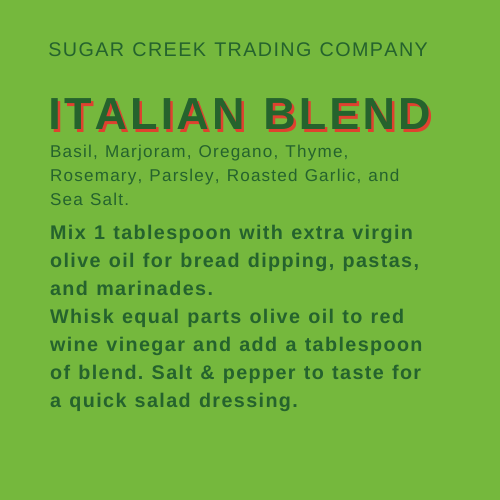
Italian Seasoning is one of the most versatile blends in any kitchen. Add it generously to tomato sauces, pizza, pasta dishes, soups, stews, roasted vegetables, grilled meats, and marinades. It blooms beautifully when added to warm olive oil at the start of cooking, releasing its volatile oils into the fat for maximum flavor and bioavailability. For a quick herb bread, mix with olive oil and brush onto warm bread or focaccia. It is equally at home in vinaigrettes, compound butters, and dry rubs for poultry and fish.
Beyond the kitchen, Italian Seasoning makes a surprisingly pleasant digestive tea. Steep one to two teaspoons in a cup of just-boiled water for 10 to 15 minutes, strain, and sip after a heavy meal to ease bloating and promote comfortable digestion. The infusion can also be used as a gargle for sore throats, as the thymol and carvacrol content provides antiseptic action. For a warming muscle rub, infuse the blend into olive oil over low heat for several hours, strain, and apply to sore muscles and joints.
OPTIMAL CONTEXT FOR USE
Italian Seasoning is especially well-suited for individuals experiencing:
Sluggish digestion, gas, bloating, or discomfort after meals, particularly with rich or heavy foods
A desire to increase daily antioxidant and anti-inflammatory intake through whole-food sources rather than supplements
Frequent minor respiratory complaints such as seasonal congestion or sore throats
A need for convenient, broad-spectrum herbal support integrated seamlessly into everyday cooking
This blend pairs naturally with garlic, black pepper, and olive oil, all of which enhance the bioavailability and synergistic effects of its key compounds. It is an ideal foundation seasoning for anyone pursuing a Mediterranean-style anti-inflammatory diet.
SUSTAINABILITY AND ETHICAL HARVESTING
All of the herbs in Italian Seasoning are widely cultivated agricultural crops with no conservation concerns. Oregano, thyme, basil, rosemary, marjoram, and sage are grown commercially across the Mediterranean, North America, and many other regions. They are hardy, fast-growing perennials (or annuals, in the case of basil) that thrive with minimal inputs and are well-suited to organic cultivation. Many of these herbs also support pollinator health, providing abundant nectar and pollen for bees and butterflies.
Sourcing from suppliers who prioritize organic or pesticide-free cultivation ensures the cleanest product with the highest essential oil content. Conventional herb farming sometimes involves irradiation and heavy pesticide use, which can diminish both the flavor and the therapeutic quality of the final product. Choosing high-quality, responsibly sourced herbs supports both personal health and sustainable agricultural practices.
SAFETY AND CAUTIONS
Italian Seasoning is extremely safe when used in normal culinary amounts and has an unbroken history of daily food use across cultures.
Individuals with known allergies to plants in the Lamiaceae (mint) family should use caution, as all component herbs belong to this family. Allergic reactions are rare but possible.
Sage contains thujone, which in very large medicinal doses (far exceeding culinary amounts) can be neurotoxic. Normal seasoning use presents no risk, but concentrated sage extracts should be used with care.
Pregnant women can safely use Italian Seasoning in food amounts. However, concentrated therapeutic doses of sage and rosemary are traditionally cautioned against during pregnancy due to potential uterine-stimulating effects.
Those on blood-thinning medications should be aware that several herbs in this blend have mild anticoagulant properties. Culinary amounts are not a concern, but large supplemental doses should be discussed with a healthcare provider.
REFERENCES
Singletary, K. "Oregano: Overview of the Literature on Health Benefits." Nutrition Today, 45(3), 2010, pp. 129-138.
Bozin, B. et al. "Characterization of the Volatile Composition of Essential Oils of Some Lamiaceae Spices and the Antimicrobial and Antioxidant Activities of the Entire Oils." Journal of Agricultural and Food Chemistry, 54(5), 2006, pp. 1822-1828.
Petersen, M. and Simmonds, M.S.J. "Rosmarinic Acid." Phytochemistry, 62(2), 2003, pp. 121-125.
FINAL NOTE
Italian Seasoning is a quiet powerhouse -- so familiar that its medicinal depth is easily overlooked. Every pinch delivers a synergistic combination of antimicrobial, antioxidant, and digestive compounds refined by millennia of Mediterranean culinary tradition. It is proof that the most powerful herbal medicine is often the kind you use every day without thinking twice, woven into the fabric of a good meal.
Condividere