Sugar Creek Trading Company
Paprika Spanish
Paprika Spanish
Impossibile caricare la disponibilità di ritiro
CAPSICUM ANNUUM
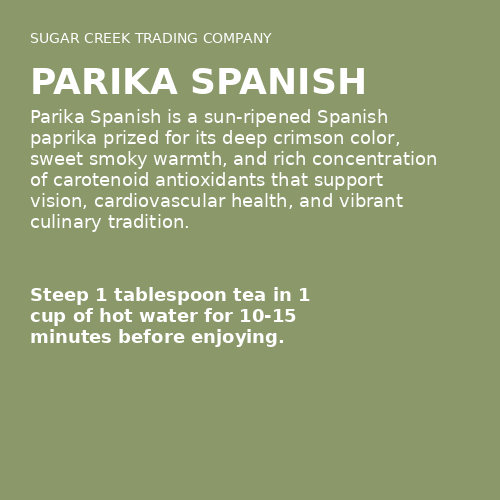
Sun-ripened Spanish paprika prized for its deep crimson color, sweet smoky warmth, and rich concentration of carotenoid antioxidants that support vision, cardiovascular health, and vibrant culinary tradition.
BOTANICAL IDENTIFICATION
Scientific Name: Capsicum annuum L. (Spanish paprika cultivars)
Common Names: Spanish paprika, pimenton, pimenton dulce, sweet paprika, smoked paprika
Family: Solanaceae (Nightshade family)
Capsicum annuum is an herbaceous annual (or short-lived perennial in frost-free climates) growing 40 to 80 centimeters tall, producing simple, alternate leaves and small white flowers that develop into pendant, elongated fruit pods. Spanish paprika cultivars have been selectively bred over centuries for their large, thick-walled, deeply pigmented fruit that dries to a rich, dark red. The peppers are typically mild to moderately pungent, with Scoville heat units ranging from 0 to 1,000 depending on the variety, placing them firmly in the sweet-to-mild range compared to hot chili peppers.
Spanish paprika is produced primarily in two designated regions of Spain: La Vera in Extremadura, where the peppers are traditionally smoke-dried over oak fires to produce pimenton de la Vera, and Murcia in southeastern Spain, where sun-drying produces the brighter, unsmoked pimenton de Murcia. Both hold Denominacion de Origen Protegida (DOP) status, the Spanish equivalent of protected designation of origin, guaranteeing provenance and traditional production methods. Spanish paprika is distinguished from Hungarian and other paprikas by its unique cultivar selection, terroir, and the traditional smoking or sun-drying processes that define its flavor profile.
CULTURAL AND HISTORICAL USE
The story of Spanish paprika begins with the arrival of Capsicum peppers in Spain following Columbus's return from the Americas in the late fifteenth century. Hieronymite monks at the Monastery of Guadalupe in Extremadura are credited with being among the first to cultivate the New World peppers in Spanish soil, adapting tropical varieties to the Mediterranean climate and developing the milder, large-fruited cultivars that would become Spanish paprika. By the sixteenth century, paprika cultivation had spread throughout the Extremadura and Murcia regions, and the distinctive practice of oak-smoke drying in La Vera had been established.
Spanish paprika rapidly became indispensable in Iberian cuisine. It is the defining spice of chorizo, the iconic Spanish cured sausage, and is essential to dishes including patatas bravas, pulpo a la gallega (Galician octopus), romesco sauce, and countless stews, rice dishes, and marinades. The pimenton de la Vera variety, with its characteristic smoky flavor, is considered one of Spain's most important culinary treasures and has gained worldwide recognition among professional chefs and home cooks.
Beyond the kitchen, Spanish paprika has a modest but documented history in Iberian folk medicine. Rural communities used paprika poultices for joint pain and muscle aches, paprika-infused oils for improving circulation in cold extremities, and mild paprika teas as digestive stimulants. The vibrant red color was also traditionally associated with vitality and strength, and paprika was occasionally worn in amulets as a protective charm against illness. In the twentieth century, the Hungarian-born scientist Albert Szent-Gyorgyi made his Nobel Prize-winning discovery of vitamin C partly through his work on paprika peppers, demonstrating the extraordinary nutritional density of the Capsicum fruit.
KEY BIOACTIVE COMPOUNDS & BENEFITS
| Compound/Class | Location in Plant | Human Benefit | Role in Plant |
|---|---|---|---|
| Capsanthin and capsorubin (carotenoids) | Fruit pericarp (flesh) | Potent antioxidant; supports eye health, reduces LDL oxidation, anti-inflammatory | Photosynthetic pigment and UV protection |
| Beta-carotene (provitamin A) | Fruit flesh | Converted to vitamin A; supports immune function, skin health, and vision | Accessory photosynthetic pigment |
| Vitamin C (ascorbic acid) | Fruit flesh (partially reduced in drying) | Immune support; collagen synthesis; enhances iron absorption | Antioxidant defense and metabolic cofactor |
| Capsaicin (trace to low levels) | Placental tissue of fruit | Mild circulatory stimulation; gentle pain relief; metabolic activation | Mammalian deterrent to protect seeds |
| Vitamin E (tocopherols) | Fruit flesh and seeds | Fat-soluble antioxidant; protects cell membranes; supports cardiovascular health | Lipid membrane protection |
Spanish paprika is distinguished from many other spices by its extraordinary carotenoid density. The red pigment capsanthin, which is unique to Capsicum species, is one of the most potent lipophilic antioxidants found in any food. A single tablespoon of high-quality Spanish paprika can provide significant amounts of provitamin A, vitamin E, and these specialized carotenoids, making it one of the most nutritionally dense spices by volume. The mild capsaicin content provides gentle thermogenic and circulatory benefits without the intense heat that limits the usable quantity of hotter pepper varieties.
HOW IT WORKS IN THE BODY
Spanish paprika delivers its health benefits through a combination of carotenoid antioxidant activity, mild capsaicinoid stimulation, and essential micronutrient provision.
Carotenoid Antioxidant Protection:
Capsanthin and capsorubin are powerful quenchers of singlet oxygen and peroxyl radicals, protecting lipid-rich tissues including cell membranes, LDL cholesterol particles, and the retina of the eye from oxidative damage. These carotenoids are absorbed in the small intestine along with dietary fats and distributed to tissues throughout the body. Research published in the British Journal of Nutrition has shown that regular paprika consumption increases serum carotenoid levels and reduces markers of LDL oxidation, a key driver of atherosclerosis.
Vision Support:
The combination of beta-carotene, capsanthin, and zeaxanthin in paprika supports the health of the macula and retina. Beta-carotene is converted to retinal (vitamin A aldehyde) essential for rod cell function in low-light vision, while the xanthophyll carotenoids accumulate in the macula and provide a protective filter against blue-light damage. Regular consumption of carotenoid-rich foods like paprika is associated with reduced risk of age-related macular degeneration.
Mild Thermogenic and Circulatory Effects:
Even at the low capsaicin concentrations present in Spanish paprika, there is sufficient capsaicinoid content to gently stimulate TRPV1 receptors, promoting mild vasodilation and improved peripheral circulation. This contributes to the warming sensation experienced when consuming paprika-rich foods and may enhance the absorption and distribution of other nutrients and herbal compounds consumed at the same meal.
Iron Absorption Enhancement:
Paprika's residual vitamin C content, combined with its organic acids, significantly enhances the absorption of non-heme iron from plant-based foods. This makes paprika a valuable culinary addition to vegetarian and vegan diets where iron absorption can be a concern. The traditional Spanish practice of seasoning legume stews and grain dishes generously with paprika has a sound nutritional basis.
DOSE GUIDELINES
| Preparation Type | Typical Dose | Purpose |
|---|---|---|
| Culinary use | 1 to 3 teaspoons per dish (as seasoning) | Daily carotenoid intake, flavor, color, and mild circulatory support |
| Nutritional supplement | 1 to 2 teaspoons daily, added to food or smoothies | Concentrated antioxidant supplementation and vitamin A support |
| Infused oil (topical) | Infuse 2 tablespoons paprika in 1 cup carrier oil for 2 weeks | Warming massage oil for sore muscles and poor circulation |
| Warm paprika milk or broth | 1 teaspoon stirred into warm liquid | Digestive stimulation and gentle warming tonic |
Spanish paprika is best consumed as a generous culinary seasoning rather than a capsule supplement. Because its key carotenoids are fat-soluble, consuming paprika with dietary fat dramatically increases absorption. The traditional Spanish technique of briefly blooming paprika in warm olive oil before adding it to dishes maximizes both flavor development and carotenoid bioavailability. Avoid cooking paprika at very high direct heat, as the sugars and carotenoids can burn quickly, producing a bitter, acrid taste.
PREPARATION AND USES
The most important technique for Spanish paprika is blooming in oil. Remove the pan from direct heat, add one to three teaspoons of paprika to warm (not smoking) olive oil, and stir for 15 to 30 seconds until fragrant. This step releases the fat-soluble flavor and color compounds and prevents the paprika from scorching. The bloomed paprika oil can then serve as the flavor base for stews, soups, rice dishes, sauces, and marinades.
For a traditional Spanish marinade, combine two tablespoons of Spanish paprika with olive oil, minced garlic, a splash of sherry vinegar, oregano, and salt. This mixture is used to marinate meats, fish, and vegetables before grilling or roasting. To make a paprika-infused oil for topical use, gently warm one cup of olive or almond oil with two tablespoons of paprika over very low heat for 30 minutes, then strain through cheesecloth and store in a dark bottle. This oil can be used as a warming massage preparation for sore muscles, stiff joints, and cold extremities.
In herbal practice, paprika can be added to herbal capsule blends where a mild circulatory stimulant is needed to enhance the delivery of other herbs. It serves a similar role to cayenne pepper but at a much milder heat level, making it suitable for individuals who cannot tolerate hot peppers. Paprika also makes an attractive, nutrient-rich addition to herbal seasoning blends, salad dressings, and savory herbal tea preparations.
OPTIMAL CONTEXT FOR USE
This spice is especially well-suited for individuals experiencing:
Oxidative stress and cardiovascular risk where regular dietary antioxidant intake from carotenoids supports heart and vascular health
Eye health concerns including early macular degeneration risk, eye fatigue, or desire to support long-term vision health
Poor circulation and cold extremities where gentle vasodilation and warming action improve comfort and peripheral blood flow
Iron-deficient diets, particularly vegetarian and vegan diets, where paprika's vitamin C and organic acids enhance non-heme iron absorption
Desire for flavorful, nutrient-dense cooking that naturally incorporates medicinal compounds into everyday meals
Spanish paprika pairs naturally with turmeric, cumin, garlic, and oregano in culinary applications, and with ginger and cayenne in herbal formulations targeting circulation and inflammation.
SUSTAINABILITY AND ETHICAL HARVESTING
Capsicum annuum is one of the most widely cultivated crops on Earth and faces no conservation concerns. Spanish paprika specifically is a product of intensive agricultural tradition, cultivated in designated regions of Spain where local farming communities have maintained paprika production for over five centuries. The DOP-certified paprikas from La Vera and Murcia support rural economies in regions that might otherwise face agricultural abandonment.
The traditional La Vera smoking process uses sustainably managed oak wood from local forests, and the smoke-drying houses (secaderos) are themselves cultural heritage structures maintained by farming families. Supporting authentic DOP Spanish paprika helps preserve these traditional practices, supports rural Spanish livelihoods, and ensures the highest quality product. Non-DOP Spanish paprika is also widely available from conventional cultivation and offers a more affordable option while still providing the characteristic Spanish cultivar flavor profile.
SAFETY AND CAUTIONS
Spanish paprika is one of the safest botanicals in the spice cabinet, with an extensive history of daily dietary use across cultures.
Nightshade sensitivity: As a member of the Solanaceae family, paprika may not be tolerated by individuals following nightshade-elimination diets for autoimmune conditions. Those with confirmed nightshade sensitivity should avoid paprika.
Allergic reactions: True paprika allergy is rare but documented. Symptoms may include oral itching, skin rash, or in rare cases anaphylaxis. Individuals with known allergies to other Capsicum species should exercise caution.
Gastric irritation: While much milder than hot peppers, large quantities of paprika may irritate sensitive stomachs, particularly in individuals with active gastritis or peptic ulcers.
Contamination concerns: Paprika has historically been one of the spices most vulnerable to adulteration (addition of synthetic dyes or filler materials). Purchase from reputable suppliers who test for purity and heavy metals.
Pregnancy and nursing: Paprika in normal culinary amounts is considered safe during pregnancy and nursing. No restrictions apply at food-level doses.
REFERENCES
Minguez-Mosquera, M. I., and Hornero-Mendez, D. "Separation and quantification of the carotenoid pigments in paprika oleoresins." Journal of Agricultural and Food Chemistry, 41(10), 1993, pp. 1616-1620.
Kim, J. S., et al. "Capsanthin inhibits macrophage-mediated inflammation and oxidative stress in murine models." European Journal of Pharmacology, 843, 2019, pp. 46-55.
Maoka, T., et al. "Cancer chemopreventive activity of carotenoids in the fruits of red paprika Capsicum annuum L." Cancer Letters, 172(2), 2001, pp. 103-109.
Topuz, A., and Ozdemir, F. "Assessment of carotenoids, capsaicinoids, and ascorbic acid composition of some selected pepper cultivars." Journal of Food Composition and Analysis, 20(7), 2007, pp. 596-602.
FINAL NOTE
Spanish paprika is a reminder that the line between food and medicine was drawn by modern convention, not by nature. This magnificent spice delivers a remarkable payload of specialized carotenoid antioxidants, gentle circulatory stimulants, and essential vitamins in every vibrant red teaspoon. Its five centuries of cultivation in the sun-drenched soils of Extremadura and Murcia have produced one of the world's great culinary spices, one that nourishes the body as richly as it flavors the plate. Used generously and daily as Spanish cooks have always used it, paprika transforms ordinary meals into both sensory celebrations and quiet acts of preventive medicine.
Condividere