Sugar Creek Trading Company
Dulse
Dulse
Couldn't load pickup availability
PALMARIA PALMATA
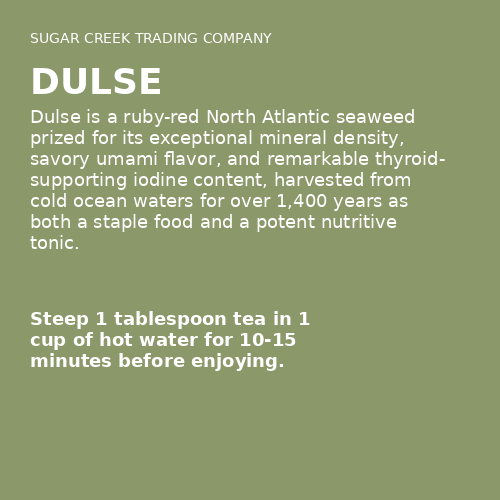
A ruby-red North Atlantic seaweed prized for its exceptional mineral density, savory umami flavor, and remarkable thyroid-supporting iodine content, harvested from cold ocean waters for over 1,400 years as both a staple food and a potent nutritive tonic.
BOTANICAL IDENTIFICATION
Scientific Name: Palmaria palmata (L.) Weber & Mohr
Common Names: Dulse, Dillisk, Dilleasc, Creathnach, Sea Lettuce Flakes, Red Dulse, Dilisk
Family: Palmariaceae (Red algae)
Dulse is a red macroalga (seaweed) that grows in flat, smooth, hand-shaped or fan-shaped fronds, typically 15 to 50 cm long, though specimens can exceed 1 meter in favorable conditions. The fronds are soft, leathery, and somewhat translucent when fresh, ranging in color from deep ruby red to reddish-purple or burgundy, with irregular, palmate (hand-like) lobes that divide from a short, disc-shaped holdfast attached to rocks or other substrate. When dried, dulse becomes dark reddish-brown to nearly black and develops a distinctive chewy, slightly crispy texture with a rich, salty, smoky, umami flavor.
Dulse grows in the intertidal and shallow subtidal zones of cold, nutrient-rich waters throughout the North Atlantic Ocean, from Iceland and Norway to the British Isles, the Atlantic coast of France, and the northeastern coast of North America from Labrador to Long Island Sound. It attaches to rocks, shells, and other hard substrates in areas with strong tidal flow and good water clarity. The North Atlantic coasts of Ireland, Iceland, Maritime Canada (particularly New Brunswick and Nova Scotia), and Maine are the primary harvesting regions.
CULTURAL AND HISTORICAL USE
Dulse is one of the oldest documented sea vegetables in the Western world, with a continuous history of human consumption stretching back at least 1,400 years. The earliest written records of dulse harvesting come from the monks of the early medieval Irish church, who gathered it from the rocky Atlantic shores of Ireland and Scotland as a staple food during fasting periods and a source of essential minerals in a diet otherwise dominated by grain and dairy. The Irish name dilleasc and the Scottish Gaelic duilisg are among the oldest surviving words for any specific food plant in the Celtic languages, reflecting the deep cultural roots of this seaweed in North Atlantic coastal communities.
In Iceland, dulse (sol) has been a legally protected food resource since the medieval period. The Icelandic sagas and early law codes mention dulse harvesting rights, and the seaweed was traditionally eaten with butter as a protein-rich, mineral-dense snack. Along the Atlantic coast of Maritime Canada, dulse has been harvested commercially since at least the 18th century, particularly around Grand Manan Island in New Brunswick, which remains one of the world's premier dulse-producing regions. There, families have handed down dulse-harvesting traditions for generations, drying the seaweed on beach rocks in the summer sun.
In traditional folk medicine on both sides of the Atlantic, dulse was valued as a remedy for goiter (iodine deficiency-related thyroid enlargement), a condition that was common in inland populations with limited access to seafood. Coastal communities that consumed dulse regularly rarely suffered from goiter, an observation that long predated the scientific discovery of iodine. Dulse was also used as a folk remedy for scurvy, intestinal parasites, and general nutritional depletion. Modern interest in dulse has surged with the growing awareness of sea vegetables as functional foods, and dulse is now widely available as a health food, seasoning, and nutritional supplement.
KEY BIOACTIVE COMPOUNDS & BENEFITS
| Compound/Class | Location in Plant | Human Benefit | Role in Plant |
|---|---|---|---|
| Iodine (variable, typically 100-500 mcg per gram dry weight) | Entire thallus (frond) | Essential for thyroid hormone synthesis; prevents goiter; supports metabolic regulation | Absorbed from seawater; concentrated in tissues |
| Iron, potassium, magnesium, calcium, zinc | Entire thallus | Blood health; electrolyte balance; bone support; immune function; enzyme cofactors | Mineral uptake from nutrient-rich ocean water |
| Phycoerythrin and phycocyanin (phycobiliproteins) | Frond cells | Potent antioxidant; anti-inflammatory; potential neuroprotective activity | Light-harvesting pigments for photosynthesis |
| Soluble and insoluble polysaccharides (xylan, floridean starch) | Cell walls and matrix | Prebiotic fiber; supports gut health; may bind and remove heavy metals | Structural support; energy storage |
| Protein (10-25% dry weight, with all essential amino acids) | Entire thallus | Complete protein source; supports muscle and tissue repair | Structural and enzymatic proteins |
Dulse is distinguished from most other sea vegetables by its exceptionally balanced mineral profile, its relatively high and complete protein content, and its rich concentration of the red pigment phycoerythrin, a powerful antioxidant unique to red algae. Its iodine content, while significant, is generally more moderate and predictable than that of kelp-family seaweeds, making dulse a safer and more manageable daily source of dietary iodine for most individuals. The combination of bioavailable iron, complete protein, and iodine makes dulse one of the most nutritionally dense whole foods available in any category.
HOW IT WORKS IN THE BODY
Dulse functions primarily as a concentrated whole-food mineral and nutrient source, delivering bioavailable iodine, iron, and a spectrum of trace minerals along with antioxidant pigments and prebiotic fibers that support thyroid, cardiovascular, digestive, and immune health.
Thyroid Support and Metabolic Regulation:
Iodine is the essential raw material for the synthesis of thyroid hormones (T3 and T4), which regulate basal metabolic rate, body temperature, energy production, and the growth and repair of virtually every tissue in the body. Dulse provides a meaningful, food-based source of iodine that can help prevent deficiency-related hypothyroidism and goiter. Regular, moderate dulse consumption supports optimal thyroid function in populations whose diets are low in seafood and iodized salt.
Blood Health and Iron Status:
Dulse contains significant levels of bioavailable iron, along with vitamin C precursors and organic acids that enhance iron absorption. For individuals at risk of iron deficiency, including menstruating women, vegetarians, and vegans, dulse represents one of the most concentrated plant-based iron sources available. The combination of iron, B vitamins, and complete protein supports healthy red blood cell production and oxygen-carrying capacity.
Antioxidant and Anti-Inflammatory Action:
Phycoerythrin and phycocyanin, the characteristic red and blue pigments of dulse, are potent scavengers of reactive oxygen species. These phycobiliproteins have demonstrated anti-inflammatory, hepatoprotective, and neuroprotective activity in laboratory studies. The antioxidant capacity of dulse extracts consistently ranks among the highest of any seaweed tested, providing protection against oxidative stress at the cellular level.
Digestive and Prebiotic Support:
The polysaccharide fraction of dulse includes soluble fibers that act as prebiotics, feeding beneficial gut bacteria (particularly Bifidobacterium and Lactobacillus species) and supporting a healthy intestinal microbiome. These fibers also add bulk to stool, support regularity, and may help bind and remove certain heavy metals and toxins from the gastrointestinal tract, a property that has attracted growing research interest.
Cardiovascular and Electrolyte Support:
The potassium content of dulse is exceptionally high relative to its sodium content, providing a favorable potassium-to-sodium ratio that supports healthy blood pressure regulation. Magnesium and calcium further contribute to cardiovascular muscle function, nerve conduction, and blood vessel relaxation. Regular consumption of dulse as a salt substitute or seasoning may help shift overall electrolyte intake in a heart-healthy direction.
DOSE GUIDELINES
| Preparation Type | Typical Dose | Purpose |
|---|---|---|
| Dried dulse flakes (culinary) | 3-7 grams (1-2 tablespoons) daily | General mineral supplementation; thyroid support; seasoning |
| Whole dried dulse fronds (snack) | 5-10 grams daily, eaten as-is or lightly toasted | Nutritive snack; iron and iodine intake; umami satisfaction |
| Dulse powder (smoothies, capsules) | 2-5 grams daily | Concentrated mineral and antioxidant supplementation |
Dulse is a food, not a concentrated medicine, and is best used as a regular dietary inclusion. Start with small amounts (1 to 2 grams daily) and increase gradually, particularly if not accustomed to iodine-rich foods, to allow the thyroid to adjust. The iodine content of dulse varies with harvest location and season, so consistent sourcing from a reputable supplier helps ensure predictable intake. Most adults can safely consume 5 to 10 grams of dulse daily as part of a varied diet, but individuals with thyroid conditions should consult their healthcare provider regarding appropriate iodine intake.
PREPARATION AND USES
Dried dulse requires no cooking and can be eaten directly from the package as a chewy, salty, savory snack. For a crispier texture and a more intensely smoky, bacon-like flavor, dulse fronds can be lightly pan-fried in a small amount of oil for 15 to 30 seconds per side or toasted briefly in a dry skillet until they turn slightly green and crisp. This "dulse bacon" preparation has become popular in plant-based cooking for its remarkably meaty, smoky character.
Dulse flakes and powder are exceptionally versatile seasonings. Sprinkle flakes over salads, soups, rice, popcorn, eggs, or roasted vegetables for an instant umami boost and mineral enrichment. Blend dulse powder into smoothies, stir it into miso soup, or incorporate it into salad dressings and dips. Dulse can be simmered in soups, chowders, and stews, where it dissolves partially and adds body, depth, and minerality to the broth. In traditional Irish and Scottish cooking, dulse is softened in water and then simmered with potatoes, milk, and butter. Dulse also makes an excellent salt substitute for individuals reducing sodium intake, as it provides a salty, savory flavor while delivering potassium and other minerals rather than pure sodium chloride.
OPTIMAL CONTEXT FOR USE
Dulse is especially well-suited for individuals experiencing:
Low iodine intake or subclinical thyroid underperformance, particularly those who do not consume seafood regularly or live in inland, iodine-depleted regions
Iron deficiency or anemia risk, especially vegetarians, vegans, and menstruating women seeking a concentrated, plant-based iron source
A desire to increase overall mineral and trace element intake through whole-food sources rather than isolated supplements
Cardiovascular health goals, where a potassium-rich, sodium-moderate salt alternative supports healthier blood pressure
Gut health optimization, where prebiotic fiber from sea vegetables supports beneficial microbiome diversity
Dulse combines naturally with other sea vegetables (nori, kelp, wakame) for a comprehensive oceanic mineral blend. It pairs well with miso, tamari, sesame, ginger, and citrus in Asian-inspired preparations, and with potatoes, butter, cream, and smoked fish in North Atlantic culinary traditions.
SUSTAINABILITY AND ETHICAL HARVESTING
Dulse is primarily wild-harvested by hand from the rocky intertidal zones of the North Atlantic, a practice that has continued sustainably for centuries. Responsible dulse harvesters cut only the upper portion of the frond, leaving the holdfast and lower stipe intact so the seaweed can regenerate. In well-managed harvesting areas, such as Grand Manan Island in New Brunswick, Canada, and the west coast of Ireland, dulse populations are monitored and harvest practices are regulated or self-governed by harvesting communities to prevent overexploitation.
Growing global demand for dulse has spurred the development of land-based and ocean-based aquaculture systems. Researchers in Ireland, Iceland, and the United States (particularly at the Oregon State University Hatfield Marine Science Center) have developed successful dulse cultivation methods that could provide a scalable, sustainable alternative to wild harvest. Cultivated dulse has the additional advantage of consistent quality and controlled mineral content. Whether wild-harvested or cultivated, dulse production has a minimal environmental footprint, requiring no fresh water, fertilizer, or arable land.
SAFETY AND CAUTIONS
Dulse is a whole food with a very long history of safe human consumption. The following cautions relate primarily to its iodine and mineral content:
Iodine sensitivity and thyroid conditions: Dulse contains significant iodine, and excessive iodine intake can aggravate both hyperthyroidism and certain forms of hypothyroidism (particularly Hashimoto's thyroiditis). Individuals with existing thyroid disorders should consult their healthcare provider before adding dulse to their diet and should introduce it gradually. The upper tolerable intake of iodine for adults is 1,100 mcg per day; most servings of dulse provide well below this level, but intake should be monitored.
Heavy metals and contaminants: Like all seaweeds, dulse can accumulate trace amounts of heavy metals (arsenic, lead, cadmium) from ocean water. Reputable suppliers test their dulse for heavy metal content and harvest from clean, monitored waters. Source from trusted suppliers who provide lab testing data.
Sodium content: While lower in sodium than pure salt, dulse does contain natural sodium. Individuals on strict sodium-restricted diets should account for the sodium contribution of dulse in their daily intake.
Anticoagulant interaction: Some sea vegetables contain vitamin K and compounds that may affect blood clotting. Individuals on warfarin or other anticoagulants should maintain consistent seaweed intake and inform their healthcare provider.
REFERENCES
Mouritsen, O.G., et al. (2013). "On the human consumption of the red seaweed dulse (Palmaria palmata (L.) Weber & Mohr)." Journal of Applied Phycology, 25(6), 1777-1791.
Yuan, Y.V., et al. (2005). "Antioxidant and antiproliferative activities of extracts from a variety of edible seaweeds." Food and Chemical Toxicology, 43(7), 1073-1081.
Harnedy, P.A., and FitzGerald, R.J. (2011). "Bioactive proteins, peptides, and amino acids from macroalgae." Journal of Phycology, 47(2), 218-232.
FINAL NOTE
Dulse is a living bridge between land and ocean, delivering the concentrated mineral wealth of cold North Atlantic waters in a form that humans have been eating since before recorded history. In a world where soils are depleted and diets are increasingly disconnected from the sea, dulse offers something rare: a genuine whole-food source of iodine, iron, and trace minerals that also happens to be one of the most deeply savory, satisfying ingredients in any kitchen. Its smoky, umami-rich flavor and its extraordinary nutritional density make dulse not just a supplement but a food worth building meals around.
Share