Sugar Creek Trading Company
Maitake Mushroom
Maitake Mushroom
Couldn't load pickup availability
GRIFOLA FRONDOSA
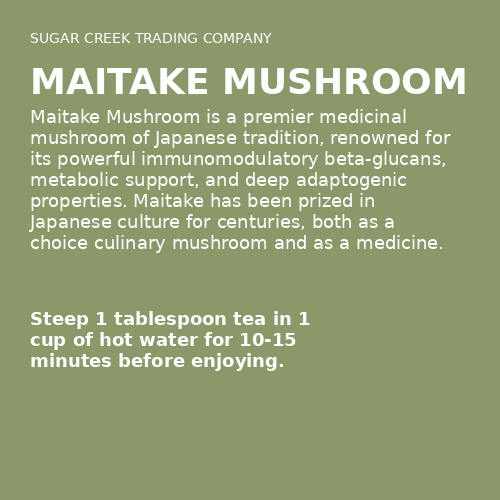
A premier medicinal mushroom of Japanese tradition, renowned for its powerful immunomodulatory beta-glucans, metabolic support, and deep adaptogenic properties.
BOTANICAL IDENTIFICATION
Scientific Name: Grifola frondosa (Dicks.) Gray
Common Names: Maitake, Hen of the Woods, Dancing Mushroom, Sheep's Head, Ram's Head, King of Mushrooms, Hui Shu Hua (Chinese)
Family: Meripilaceae (formerly Polyporaceae)
Grifola frondosa is a large, polypore mushroom that forms dense, overlapping clusters of fan-shaped, wavy-edged caps growing from a single, branching base. Individual caps are 2 to 10 cm across, grey-brown to dark brown on top with white pore surfaces beneath, creating composite fruiting bodies that can reach 20 to 50 cm in diameter and weigh 3 to 15 kg or more in mature specimens. The stipe structure is a branching, pale, fleshy core from which the multiple caps radiate outward, creating the appearance of a ruffled hen settling on a nest, hence the common English name.
Maitake grows as a saprotrophic and weakly parasitic fungus, primarily on the bases and roots of hardwood trees, with a strong preference for oak (Quercus species), but also found on elm, maple, beech, and chestnut. It is native to temperate deciduous forests of northeastern Japan, China, Europe, and eastern North America. In Japan, it fruits from late September through November at the base of the same trees year after year, making productive trees closely guarded secrets among foragers. The name "maitake" (dancing mushroom) reportedly derives from the joy of finding one in the wild, a testament to its culinary and economic value.
CULTURAL AND HISTORICAL USE
Maitake has been prized in Japanese culture for centuries, both as a choice culinary mushroom and as a medicine. In feudal Japan, maitake reportedly commanded its weight in silver, and foragers who discovered productive oak trees guarded their locations with fierce secrecy, passing them down within families across generations. The mushroom occupied a unique position as simultaneously a delicacy of refined Japanese cuisine and a folk medicine of considerable repute. Japanese herbalists traditionally used maitake to support immune function, improve stamina, regulate blood pressure, and treat "wasting" conditions characterized by loss of vitality and appetite.
In Traditional Chinese Medicine (TCM), maitake (known as Hui Shu Hua or Zhu Ling in some regional traditions, though Zhu Ling more properly refers to Polyporus umbellatus) was used to support the Spleen, drain dampness, and strengthen resistance to illness. It appeared in Chinese medicinal mushroom traditions alongside reishi (Ganoderma lucidum), shiitake (Lentinula edodes), and cordyceps, though it was historically less prominent in Chinese pharmacopoeias than in Japanese practice. The mushroom was also known in European folk traditions, where it was collected and eaten across its range, though its medicinal applications in Europe were less systematically recorded than in East Asia.
The modern era of maitake research began in the 1980s when Japanese mycologist Hiroaki Nanba, Ph.D. at Kobe Pharmaceutical University identified and characterized the beta-glucan fraction he named "D-fraction" and later "MD-fraction." Nanba's work, along with subsequent studies by researchers in Japan, China, and the United States, transformed maitake from a regional folk remedy into one of the most intensively studied medicinal mushrooms in the world. Japan approved maitake D-fraction as a pharmaceutical adjunctive therapy, and it gained recognition in integrative oncology protocols internationally.
KEY BIOACTIVE COMPOUNDS & BENEFITS
| Compound/Class | Location in Mushroom | Human Benefit | Role in Fungus |
|---|---|---|---|
| Beta-1,6-glucans with beta-1,3 branches (D-fraction/MD-fraction) | Fruiting body cell walls | Potent immunomodulation, macrophage and NK cell activation, dendritic cell maturation | Structural polysaccharide in fungal cell wall architecture |
| Grifolan (beta-1,3-glucan) | Fruiting body and mycelium | Immune stimulation, antitumor activity in preclinical models | Cell wall structural polymer and energy storage |
| SX-fraction (water-soluble glycoprotein) | Fruiting body | Blood sugar regulation, insulin sensitivity enhancement | Glycoprotein involved in cellular signaling and structure |
| Ergosterol (provitamin D2) | Cell membranes throughout | Vitamin D precursor (converts to D2 with UV exposure), membrane support | Fungal membrane sterol maintaining fluidity and integrity |
| Metalloproteinases and lectins | Fruiting body | Anti-angiogenic and antimetastatic activity in preclinical models | Enzymes for nutrient acquisition and substrate degradation |
The beta-glucan polysaccharides, particularly the D-fraction and MD-fraction characterized by Nanba, are the signature therapeutic compounds of maitake. Their unique branching pattern (beta-1,6 main chain with beta-1,3 side branches) is recognized by specific receptors on immune cells, triggering a cascade of immune activation that distinguishes maitake from other medicinal mushrooms. The SX-fraction adds a metabolic dimension rarely found in mushroom therapeutics, providing blood sugar regulatory effects that have been validated in both animal models and preliminary human studies. The combined immunological and metabolic profile makes maitake one of the most therapeutically versatile medicinal fungi.
HOW IT WORKS IN THE BODY
Maitake exerts its effects through well-characterized immunological, metabolic, and cellular signaling pathways, with an unusual breadth of action for a single-source medicine.
Immune System Activation and Modulation:
Maitake D-fraction beta-glucans bind to Dectin-1, complement receptor 3 (CR3), and toll-like receptor 2 (TLR-2) on macrophages, dendritic cells, and neutrophils. This receptor engagement triggers a signaling cascade that activates NF-kB and MAPK pathways, resulting in enhanced phagocytosis, increased production of pro-inflammatory cytokines (IL-12, TNF-alpha, IFN-gamma), and maturation of dendritic cells that are critical for adaptive immune activation. Simultaneously, maitake beta-glucans enhance natural killer (NK) cell cytotoxicity and promote T-helper cell polarization toward Th1-type responses. Importantly, maitake does not simply stimulate the immune system indiscriminately; it modulates immune response, enhancing underactive immunity while research suggests it may also help regulate overactive inflammatory responses through promotion of regulatory T cells.
Metabolic and Blood Sugar Regulation:
The SX-fraction, a water-soluble glycoprotein isolated from maitake, has demonstrated the ability to enhance insulin receptor sensitivity and improve glucose uptake in peripheral tissues. In animal models of type 2 diabetes, maitake SX-fraction reduced blood glucose levels, improved glucose tolerance, and lowered circulating insulin levels, suggesting improved metabolic efficiency rather than simply increased insulin production. Alpha-glucosidase inhibitory activity has also been documented, which slows carbohydrate digestion and blunts postprandial glucose spikes. Human pilot studies have corroborated these effects, though large-scale clinical trials are still needed.
Cardiovascular and Lipid Support:
Maitake has demonstrated cholesterol-lowering effects in animal models, reducing total cholesterol and LDL-cholesterol while modestly increasing HDL-cholesterol. The mechanism appears to involve enhanced bile acid excretion and inhibition of hepatic cholesterol synthesis. Combined with its blood pressure-modulating effects observed in animal studies, maitake may support broad cardiovascular health, though human clinical data for these specific endpoints remains preliminary.
Cellular Health and Adaptogenic Properties:
Beyond immune and metabolic effects, maitake has shown antioxidant activity through upregulation of endogenous enzymes (SOD, catalase, glutathione peroxidase) and direct free radical scavenging. Its ergosterol content provides provitamin D2, which converts to active vitamin D2 when the mushroom is exposed to UV light, either before or after harvest. This makes sun-dried maitake a meaningful dietary source of vitamin D, particularly relevant for populations with limited sun exposure.
DOSE GUIDELINES
| Preparation Type | Typical Dose | Purpose |
|---|---|---|
| Dried mushroom (decoction or culinary) | 3-7 g simmered 30-60 minutes or cooked into food | General immune tonic and nutritive support |
| Powdered mushroom | 1-3 g daily, mixed into hot water, broth, or food | Daily immune maintenance and adaptogenic support |
| Hot water extract (standardized) | 500-1500 mg daily of concentrated extract | Targeted immune modulation and metabolic support |
| Tincture (dual-extracted, water + alcohol) | 2-4 mL, 2-3 times daily | Comprehensive extraction capturing both water-soluble and alcohol-soluble compounds |
Maitake is best used as a long-term tonic, taken daily over weeks to months for cumulative immunomodulatory and metabolic benefit. The beta-glucans are not significantly degraded by cooking heat, so culinary preparations retain meaningful therapeutic activity. For targeted therapeutic applications, hot water extracts or dual-extracted preparations (using both hot water and alcohol) provide the most concentrated delivery of bioactive compounds. In Japanese integrative oncology protocols, D-fraction extract is typically dosed at 35 to 100 mg of purified beta-glucan daily, though whole mushroom preparations at standard doses also deliver significant beta-glucan content.
PREPARATION AND USES
Maitake is one of the few medicinal mushrooms that is equally prized in the kitchen and the apothecary. The fresh or reconstituted dried mushroom has a rich, earthy, umami-forward flavor and a firm, meaty texture that makes it outstanding in stir-fries, soups, risottos, tempura, pasta sauces, and grain bowls. In Japanese cuisine, maitake is considered one of the finest wild mushrooms, sauteed in butter with a splash of soy sauce, added to miso soup, or battered and deep-fried as tempura. Culinary preparation is itself a meaningful therapeutic delivery method, as the beta-glucans survive cooking temperatures.
For concentrated medicinal use, the dried mushroom is simmered in water for 30 to 60 minutes to produce a decoction that extracts the water-soluble polysaccharides. This can be consumed as a tea or used as a base for soups and broths. Powdered dried maitake can be stirred into hot beverages, blended into smoothies, or encapsulated. Dual extraction using both hot water and alcohol captures a broader spectrum of compounds, including triterpenes and sterols that are not fully water-soluble. For maximum vitamin D content, exposing dried maitake to direct sunlight (gill-side up) for 30 to 60 minutes before use converts ergosterol to vitamin D2, significantly increasing the mushroom's vitamin D value.
OPTIMAL CONTEXT FOR USE
Maitake mushroom is especially well-suited for individuals experiencing:
Immune challenges requiring broad immunomodulatory support, including seasonal immune weakness, chronic immune suppression, or recovery from illness
Blood sugar dysregulation, insulin resistance, or metabolic syndrome, where improved insulin sensitivity and glucose management are goals
Elevated cholesterol or lipid imbalances, as part of a comprehensive cardiovascular health protocol
Interest in integrative health approaches that combine culinary enjoyment with therapeutic benefit
Chronic stress or general depletion, where an adaptogenic, whole-body tonic is desired without stimulant properties
Maitake combines powerfully with other medicinal mushrooms for comprehensive immune support. The traditional Japanese and Chinese practice of using maitake alongside reishi (Ganoderma lucidum) and shiitake (Lentinula edodes) creates a complementary spectrum of beta-glucan structures that engage multiple immune receptors simultaneously. For metabolic support, maitake pairs well with bitter melon, cinnamon bark, and berberine-containing herbs. For adaptogenic protocols, it complements astragalus, ashwagandha, and eleuthero.
SUSTAINABILITY AND ETHICAL HARVESTING
Wild maitake populations are found throughout temperate hardwood forests in Japan, China, Europe, and eastern North America. In Japan, wild maitake has become increasingly scarce due to historical overharvesting and loss of old-growth oak forests, though it remains a coveted find among wild mushroom foragers. In North America, wild maitake (hen of the woods) is relatively common in oak-dominant forests from the Great Lakes region through the mid-Atlantic states and is sustainably foraged as a seasonal food.
The vast majority of commercial maitake is now produced through controlled indoor cultivation on supplemented hardwood sawdust substrates, a method pioneered in Japan in the 1980s and now practiced worldwide. Japan produces over 50,000 metric tons of cultivated maitake annually, making it one of that country's most important commercial mushroom crops. Indoor cultivation eliminates wild harvest pressure entirely and allows year-round production with consistent quality. Sugar Creek Trading Company sources maitake mushroom with attention to quality, potency, and responsible production practices.
SAFETY AND CAUTIONS
Maitake mushroom has an excellent safety profile as both a food and medicine, with centuries of culinary use and decades of clinical research supporting its tolerability. It is classified as GRAS (Generally Recognized As Safe) for food use.
Individuals taking hypoglycemic medications (insulin, metformin, sulfonylureas) should monitor blood sugar closely when adding maitake to their regimen, as its glucose-lowering effects may potentiate pharmaceutical action and increase the risk of hypoglycemia. Dose adjustments may be needed under medical supervision.
May interact with anticoagulant and antiplatelet medications. Some in vitro studies suggest maitake beta-glucans can affect platelet aggregation. Consult a healthcare provider if taking warfarin, aspirin, or other blood-thinning agents.
Individuals with mushroom allergies should avoid maitake. While true allergy to maitake is uncommon, cross-reactivity with other fungal allergens is possible.
Maitake may lower blood pressure; individuals on antihypertensive medications should monitor blood pressure when beginning regular maitake use.
Pregnant and nursing individuals should consult a qualified healthcare provider before using maitake in concentrated extract or supplemental doses. Culinary use of whole mushroom is generally considered safe.
REFERENCES
Nanba, H. "Maitake D-Fraction: Healing and Preventive Potential for Cancer." Journal of Orthomolecular Medicine, 1997; 12(1): 43-49.
Konno, S., Tortorelis, D.G., Fullerton, S.A., et al. "A Possible Hypoglycaemic Effect of Maitake Mushroom on Type 2 Diabetic Patients." Diabetic Medicine, 2001; 18(12): 1010.
He, Y., Li, X., Hao, C., et al. "Grifola frondosa Polysaccharide: A Review of Antitumor and Other Biological Activity Studies in China." Discovery Medicine, 2018; 25(138): 159-176.
Stamets, P. Mycelium Running: How Mushrooms Can Help Save the World. Ten Speed Press, 2005.
FINAL NOTE
Maitake occupies a rare and enviable position in the world of natural medicine: it is simultaneously one of the most delicious culinary mushrooms and one of the most pharmacologically potent. Its beta-glucan profile is among the most studied of any medicinal fungus, with documented effects on immune modulation, metabolic regulation, and cellular health that span decades of research. Whether sauteed in butter and served alongside a meal or simmered into a concentrated decoction, maitake delivers therapeutic depth that few single organisms can match. It is a mushroom that rewards both the palate and the body, embodying the ancient principle that the best medicine should also be good food.
Share