Sugar Creek Trading Company
Onion
Onion
Couldn't load pickup availability
ALLIUM CEPA
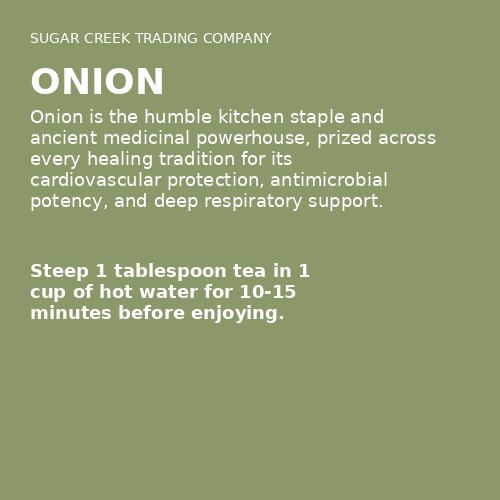
The humble kitchen staple and ancient medicinal powerhouse, prized across every healing tradition for its cardiovascular protection, antimicrobial potency, and deep respiratory support.
BOTANICAL IDENTIFICATION
Scientific Name: Allium cepa L.
Common Names: Onion, Common Onion, Bulb Onion, Garden Onion, Pyaaz (Hindi), Cebolla (Spanish), Zwiebel (German), Oignon (French)
Family: Amaryllidaceae (Amaryllis family; formerly Liliaceae)
Allium cepa is a biennial or short-lived perennial herb cultivated as an annual, growing 30 to 120 cm in height. It produces hollow, cylindrical blue-green leaves from a fleshy, layered bulb that varies widely in size, shape, and color depending on cultivar, ranging from white and yellow to deep red-purple. In its second year, the plant sends up a tall, unbranched scape topped with a spherical umbel of small white to greenish-white flowers.
Native to Central Asia, likely originating in present-day Iran, Afghanistan, and Pakistan, the onion is now cultivated on every inhabited continent. It thrives in temperate climates with well-drained, fertile soil and full sun, and is among the most widely grown vegetable crops on Earth, with global annual production exceeding 100 million metric tons.
CULTURAL AND HISTORICAL USE
The onion has been cultivated and used medicinally for at least 5,000 years, making it one of the oldest known food-medicines. Ancient Egyptians revered the onion as a symbol of eternity due to its concentric layered structure and included it in burial offerings. Laborers building the Great Pyramids were reportedly fed onions and garlic to maintain strength and ward off illness. Egyptian medical papyri, including the Ebers Papyrus (circa 1550 BCE), prescribed onion preparations for heart ailments, headaches, and parasitic infections.
In Greco-Roman medicine, Dioscorides and Pliny the Elder both documented the onion's therapeutic applications, recommending it for improving eyesight, treating dog bites, relieving toothache, and clearing respiratory congestion. Hippocrates prescribed onion poultices for pneumonia. In Ayurvedic medicine, onion (Palandu) is valued for its warming, pungent qualities and is used to stimulate digestion, resolve phlegm, and support cardiovascular health, though some Ayurvedic and yogic traditions restrict its use due to its tamasic and rajasic energetic properties. In Traditional Chinese Medicine, the green onion (Cong Bai) is classified as a warm, acrid herb used to release the exterior and disperse cold.
Throughout European folk medicine, onion poultices applied to the chest were a standard remedy for bronchitis and pneumonia. Onion juice mixed with honey was used across the Mediterranean and Middle East as a cough syrup. In the Americas, both Indigenous peoples and colonial settlers used wild and cultivated onions for treating colds, stings, and digestive complaints. The dehydrated granule form preserves the bulb's essential chemistry in a shelf-stable, concentrated format ideal for both culinary and therapeutic use.
KEY BIOACTIVE COMPOUNDS & BENEFITS
| Compound/Class | Location in Plant | Human Benefit | Role in Plant |
|---|---|---|---|
| Quercetin and quercetin glycosides | Bulb, especially outer layers | Potent antioxidant, anti-inflammatory, antihistamine, cardioprotective activity | UV-protective flavonoid pigment that shields cells from oxidative damage |
| Thiosulfinates (including allicin precursors) | Bulb cells (released on crushing) | Broad-spectrum antimicrobial, antifungal, and antiparasitic activity | Chemical defense system activated by tissue damage to repel herbivores and pathogens |
| Fructooligosaccharides (FOS) and inulin | Bulb flesh | Prebiotic fiber supporting beneficial gut bacteria, improved mineral absorption | Energy storage carbohydrates in the bulb |
| S-alk(en)yl cysteine sulfoxides (ACSOs) | Bulb cytoplasm | Cholesterol-lowering, blood sugar-regulating, and antiplatelet effects | Sulfur storage compounds that serve as precursors to defensive volatile chemicals |
| Anthocyanins (in red varieties) | Outer bulb scales | Antioxidant protection, vascular integrity support, anti-inflammatory activity | Pigments that attract pollinators and protect tissues from UV radiation |
Onion's therapeutic profile arises from the synergy between its sulfur compounds and its flavonoid content. Quercetin, found in onion at higher concentrations than in almost any other common food, provides systemic antioxidant and anti-inflammatory protection, while the volatile sulfur compounds deliver antimicrobial potency and cardiovascular benefits. The prebiotic fiber fraction adds a gut-health dimension that amplifies the bioavailability of other nutrients. Dehydrated onion granules retain these compounds in concentrated form, with some evidence that the drying process may even increase quercetin bioavailability.
HOW IT WORKS IN THE BODY
Onion exerts its effects through several interconnected pharmacological pathways, centering on the cardiovascular, immune, digestive, and respiratory systems.
Cardiovascular and Metabolic Support:
Quercetin inhibits the oxidation of LDL cholesterol, a key step in atherosclerotic plaque formation, while onion's sulfur compounds reduce hepatic cholesterol synthesis and inhibit platelet aggregation through thromboxane pathway modulation. Clinical trials have demonstrated reductions in blood pressure, fasting blood glucose, and total cholesterol with regular onion consumption. The sulfur amino acid derivatives also promote hydrogen sulfide (H2S) signaling, which supports vascular relaxation and endothelial function.
Immune Defense and Antimicrobial Action:
When onion tissue is disrupted, the enzyme alliinase converts ACSOs into thiosulfinates and other reactive sulfur species with documented activity against bacteria (including antibiotic-resistant strains), fungi, viruses, and parasites. Quercetin additionally modulates immune function by stabilizing mast cells and reducing histamine release, providing natural antiallergic and anti-inflammatory support.
Respiratory Support:
Onion's volatile sulfur compounds act as natural expectorants, helping to thin and mobilize mucus in the bronchial passages. Quercetin's antihistamine properties complement this by reducing airway inflammation and hypersensitivity. This dual action underlies the traditional use of onion preparations for coughs, bronchitis, and congestion.
Gut Health and Prebiotic Function:
The fructooligosaccharides in onion selectively feed beneficial Bifidobacterium and Lactobacillus species in the colon, promoting a healthy microbiome composition. This prebiotic effect has downstream benefits for immune regulation, mineral absorption (particularly calcium and magnesium), and short-chain fatty acid production.
DOSE GUIDELINES
| Preparation Type | Typical Dose | Purpose |
|---|---|---|
| Onion granules (culinary/supplemental) | 2-5 g daily, added to food or stirred into warm water | General cardiovascular, antioxidant, and prebiotic support |
| Onion tea (infusion) | 1-2 teaspoons granules steeped in hot water for 10-15 minutes | Respiratory support, cough and congestion relief |
| Onion syrup (granules simmered with honey) | 1-2 tablespoons of prepared syrup, 3-4 times daily | Traditional cough remedy, sore throat relief |
| Culinary use (daily cooking) | Generous use as a seasoning throughout meals | Sustained dietary intake for long-term cardiovascular and metabolic benefits |
Onion is best used consistently as a daily dietary component rather than as an acute therapeutic intervention. The cardiovascular and prebiotic benefits accumulate over weeks and months of regular consumption. For respiratory complaints, onion tea or syrup can be used acutely during cold and flu season. The granule form is particularly convenient for incorporating therapeutic doses into everyday cooking without the preparation time of fresh onions.
PREPARATION AND USES
Onion granules are among the most versatile pantry staples, bridging culinary and medicinal applications seamlessly. They can be added directly to soups, stews, sauces, marinades, dressings, and dry rubs, providing concentrated onion flavor and therapeutic compounds. For a simple medicinal tea, steep one to two teaspoons of granules in a cup of boiling water for 10-15 minutes, strain, and add honey. To prepare a traditional onion cough syrup, simmer granules with raw honey and a small amount of water on low heat for 20 minutes, then strain and store refrigerated.
In culinary practice, onion granules are invaluable for spice blends, seasoning mixes, and recipes where even texture distribution is important. They rehydrate quickly in sauces and soups, releasing their full flavor and nutritional profile. For topical folk applications, a paste of reconstituted onion granules has been used as a poultice for insect stings and minor skin irritations, though fresh onion is traditionally preferred for this purpose.
OPTIMAL CONTEXT FOR USE
Onion granules are especially well-suited for individuals experiencing:
Elevated cholesterol, high blood pressure, or general cardiovascular risk factors where dietary intervention is desired
Recurrent upper respiratory infections, seasonal coughs, bronchial congestion, or sinus issues
Seasonal allergies or histamine-related sensitivities where natural antihistamine support may help
Digestive imbalances or a desire to improve gut microbiome diversity through prebiotic fiber intake
A need for convenient, shelf-stable onion nutrition without the preparation and perishability of fresh bulbs
Onion pairs exceptionally well with garlic for amplified cardiovascular and antimicrobial effects, with turmeric for enhanced anti-inflammatory action, and with black pepper to boost overall bioavailability. Its mild, savory flavor makes it easy to incorporate into virtually any dietary pattern.
SUSTAINABILITY AND ETHICAL HARVESTING
The common onion is one of the most extensively cultivated vegetable crops in the world, grown commercially on every continent except Antarctica. It is produced entirely through agriculture with no reliance on wild harvesting, and its cultivation presents no conservation concerns. The dehydration process that produces onion granules extends shelf life dramatically, reducing food waste compared to fresh bulbs and lowering the carbon footprint associated with cold-chain transportation.
Sustainability considerations for onion production center on agricultural practices, including water use in arid growing regions, pesticide application in conventional farming, and soil health management. Organically grown onions, sourced from farms practicing responsible water and soil stewardship, represent the most sustainable option. Sugar Creek Trading Company prioritizes quality sourcing to deliver a product that is both potent and responsibly produced.
SAFETY AND CAUTIONS
Onion is universally recognized as safe for culinary use and has an extensive safety record spanning millennia. It is classified as Generally Recognized as Safe (GRAS) by the U.S. FDA.
Individuals with known allium allergies or sensitivities should avoid onion products. Allium intolerance can manifest as gastrointestinal distress, skin irritation, or, rarely, anaphylaxis in those with true allergy.
Onion contains moderate amounts of FODMAPs (fructans) and may trigger symptoms in individuals with irritable bowel syndrome (IBS) or FODMAP sensitivities. Starting with small amounts is advisable for those with known digestive sensitivities.
Due to mild antiplatelet activity, individuals on blood-thinning medications should be aware of potential additive effects at very high supplemental doses, though normal culinary use is not a concern.
Onion is safe during pregnancy and breastfeeding at normal dietary amounts. Extremely large supplemental doses have not been extensively studied in pregnancy.
REFERENCES
Slimestad, R., Fossen, T., & Vagen, I.M. "Onions: A Source of Unique Dietary Flavonoids." Journal of Agricultural and Food Chemistry, 2007; 55(25): 10067-10080.
Griffiths, G., Trueman, L., Crowther, T., Thomas, B., & Smith, B. "Onions: A Global Benefit to Health." Phytotherapy Research, 2002; 16(7): 603-615.
Dorsch, W., & Wagner, H. "New Antiasthmatic Drugs from Traditional Medicine?" International Archives of Allergy and Applied Immunology, 1991; 94(1-4): 159-161.
Corzo-Martinez, M., Corzo, N., & Villamiel, M. "Biological Properties of Onions and Garlic." Trends in Food Science & Technology, 2007; 18(12): 609-625.
FINAL NOTE
Onion granules concentrate the extraordinary medicinal chemistry of one of humanity's oldest cultivated plants into a convenient, shelf-stable form. What appears to be a simple kitchen seasoning is in fact a dense source of quercetin, antimicrobial sulfur compounds, and prebiotic fiber, offering quiet but powerful support for the heart, lungs, gut, and immune system with every pinch added to a meal. Few herbs can claim such a seamless integration of food and medicine, and few deliver such broad-spectrum benefits with such effortless daily use.
Share