Sugar Creek Trading Company
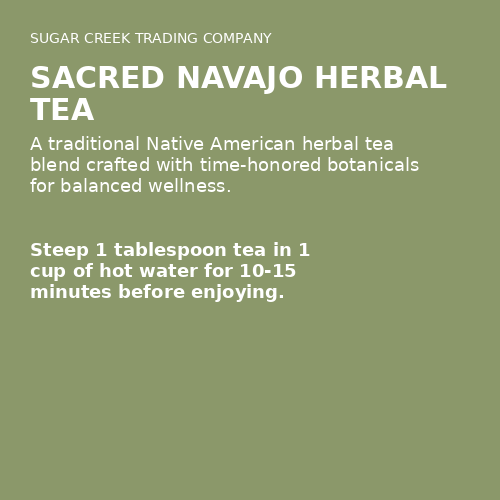
Sacred Navajo Herbal Tea
Sacred Navajo Herbal Tea
Couldn't load pickup availability
Sacred Eagle Herbal Smoking Tea
A Traditional Ceremonial Blend Honoring Indigenous Herbal Wisdom
Botanical Identification
Product Type: Traditional herbal smoking and tea blend
Tradition: Inspired by Navajo (Dine) and broader Indigenous North American ceremonial herbalism
Common Ingredients: Typically includes mullein (Verbascum thapsus), red willow bark (Cornus sericea), bearberry/uva ursi (Arctostaphylos uva-ursi), and other traditional botanicals
Form: Loose-cut dried herb blend suitable for smoking or brewing as tea
This blend draws on generations of Indigenous botanical knowledge, where specific plants were selected not merely for flavor or effect but for their spiritual significance and role in ceremony. We offer this product with deep respect for the cultures from which these traditions originate and encourage all users to approach it with reverence and mindfulness.
Cultural and Historical Use
Among many Native American nations, herbal smoking blends known collectively as kinnikinnick have been used in prayer, meditation, and ceremony for thousands of years. The act of smoking sacred herbs was understood as a way to carry prayers upward with the rising smoke, to purify the spirit, and to establish connection between the physical and spiritual worlds.
The Navajo (Dine) people have a rich tradition of plant medicine integrated into their holistic worldview. Herbs were never considered merely biochemical agents; they were living relatives whose medicine worked on the mind, body, and spirit simultaneously. Ceremonial smoking and tea preparation were acts of reciprocity with the natural world.
Red willow bark, bearberry, and mullein each hold specific places in the traditions of various Indigenous peoples across Turtle Island. These plants were often blended in proportions guided by oral tradition passed through medicine keepers. We honor these traditions while acknowledging that the full ceremonial context belongs to the Indigenous communities who have safeguarded this knowledge.
Key Bioactive Compounds
| Compound | Source Herb | Known Activity |
|---|---|---|
| Arbutin | Bearberry (Uva Ursi) | Urinary antiseptic; anti-inflammatory |
| Salicin | Red Willow Bark | Natural analgesic and anti-inflammatory (aspirin precursor) |
| Saponins | Mullein | Expectorant; soothes respiratory mucosa |
| Verbascoside | Mullein | Antioxidant; antimicrobial |
| Tannins | Multiple herbs in blend | Astringent; tissue-toning; antimicrobial |
| Flavonoids | Multiple herbs in blend | Anti-inflammatory; antioxidant protection |
How It Works in the Body
As a tea: When brewed, this blend releases water-soluble compounds including tannins, flavonoids, and saponins. Mullein acts as a gentle respiratory soother, helping to calm irritated airways and support healthy mucus clearance. Red willow bark contributes mild analgesic and anti-inflammatory properties through its salicin content. Bearberry provides urinary tract support through the action of arbutin, which converts to hydroquinone in alkaline urine.
As a smoking blend: When used traditionally as a smoking herb, mullein serves as a smooth, low-irritation base that has long been valued for its paradoxically soothing effect on the lungs. The combined aromatics of the blend engage the olfactory system and limbic brain, promoting a meditative, grounded state. The ritual act of mindful smoking itself activates parasympathetic nervous system responses that reduce stress and promote presence.
The synergistic design of this blend reflects traditional wisdom: mullein provides a smooth smoking base and respiratory support, red willow bark adds gentle warmth and mild analgesic comfort, and bearberry contributes a subtle aromatic quality and grounding energy.
Dose Guidelines
| Method | Amount | Instructions |
|---|---|---|
| Tea Infusion | 1-2 teaspoons per cup | Steep in hot water (200-210F) for 8-12 minutes; strain and sip mindfully |
| Smoking Blend | Small pinch | Use in a pipe or rolled; smoke slowly and with intention, not for habitual use |
| Ceremonial Use | As guided by tradition | Follow the guidance of elders or established ceremonial protocols |
Preparation and Uses
- Mindful Tea Ritual: Brew a strong infusion and drink slowly during meditation, journaling, or quiet reflection
- Smoke Offering: Burn a small amount in a fire-safe vessel as an offering or prayer, allowing the smoke to carry intentions
- Pipe Blend: Use in a dedicated ceremonial pipe; approach with respect and clear intention
- Relaxation Tea: Brew a lighter infusion in the evening to promote calm and grounding before sleep
- Respiratory Support Tea: The mullein component makes this a gentle ally for seasonal respiratory comfort when taken as a warm tea
Optimal Context for Use
This blend is best suited for moments of intentional stillness -- meditation, prayer, ceremony, or quiet contemplation. It is not intended as a casual, habitual smoking product. The herbs in this blend were traditionally selected for sacred purposes, and we encourage users to honor that legacy by using them mindfully.
Whether brewed as a tea or used as a smoking blend, create a calm, clean space. Set an intention before use. Allow yourself time to be present with the experience rather than multitasking.
Sustainability and Ethical Harvesting
The herbs in this blend are sourced with attention to sustainable harvesting practices. Mullein grows abundantly as a naturalized plant across North America. Red willow and bearberry are wildcrafted or cultivated with care for the ecosystems in which they grow.
We recognize that Indigenous plant knowledge has historically been extracted without credit or compensation. We encourage our customers to learn about the nations whose traditions inform blends like this, and to support Indigenous-led organizations, land-back initiatives, and cultural preservation efforts.
Safety and Cautions
- Smoking any substance carries inherent respiratory risks. This product is not marketed as a safe alternative to tobacco. If you choose to smoke it, do so sparingly and with intention.
- Not recommended during pregnancy or breastfeeding
- Bearberry (uva ursi) should not be consumed in large amounts or for prolonged periods due to hydroquinone content; limit tea use to short-term
- Those with aspirin sensitivity should use caution due to the salicin content in red willow bark
- Not intended for children
- This product is not intended to diagnose, treat, cure, or prevent any disease
References
- Moerman, D.E. Native American Ethnobotany. Timber Press, 1998.
- Kindscher, K. Medicinal Wild Plants of the Prairie. University Press of Kansas, 1992.
- Tilford, G.L. Edible and Medicinal Plants of the West. Mountain Press, 1997.
- Turker, A.U., and Camper, N.D. "Biological activity of common mullein." Journal of Ethnopharmacology, 82(2-3), 2002.
- Yarnell, E. "Botanical medicines for the urinary tract." World Journal of Urology, 20(5), 2002.
Final Note: Sacred Eagle Herbal Smoking Tea is offered with respect for the Indigenous traditions that have long understood the power of plant medicine. Whether you brew it as tea or use it ceremonially, approach this blend with gratitude for the plants themselves and for the cultures that preserved this knowledge across generations. Mindful use transforms a simple herbal blend into a meaningful practice of connection and presence.
Share